The Business Behind the Ball: What FIFA World Cup 2026 Sponsors Reveal About Modern Marketing
Every four years the world stops to watch football. Billions of people across every timezone tune in to the matches. They gather in living rooms and spill into fan parks to argue passionately about offside calls. Quietly behind the spectacle, some of the most powerful corporations spend hundreds of millions of dollars to ensure their logo is visible.
The 2026 FIFA World Cup is bigger than anything we have seen before. Co hosted across the United States, Canada, and Mexico, it features 48 national teams. This is a massive jump from the traditional 32 teams. Fans will witness a gruelling 104 matches over the course of the tournament.
Revenue projections for this global event are expected to cross 11 billion dollars. For anyone running a business, managing a digital strategy, or developing a website, this is not just a sports tournament. It is a live real world case study in brand building at a global scale.
Modern marketing requires more than just placing a logo on a banner. It demands a robust digital ecosystem, flawless web architecture, and strategic search engine optimization. We are going to break down how these billion dollar marketing strategies translate to the digital services that businesses need today.
The Digital Scale of the 2026 Tournament
Understanding the scale of this event is crucial for any business leader. The shift from 32 to 48 teams introduces entirely new fanbases to the global stage. These are fresh consumer demographics that brands are suddenly very eager to capture.
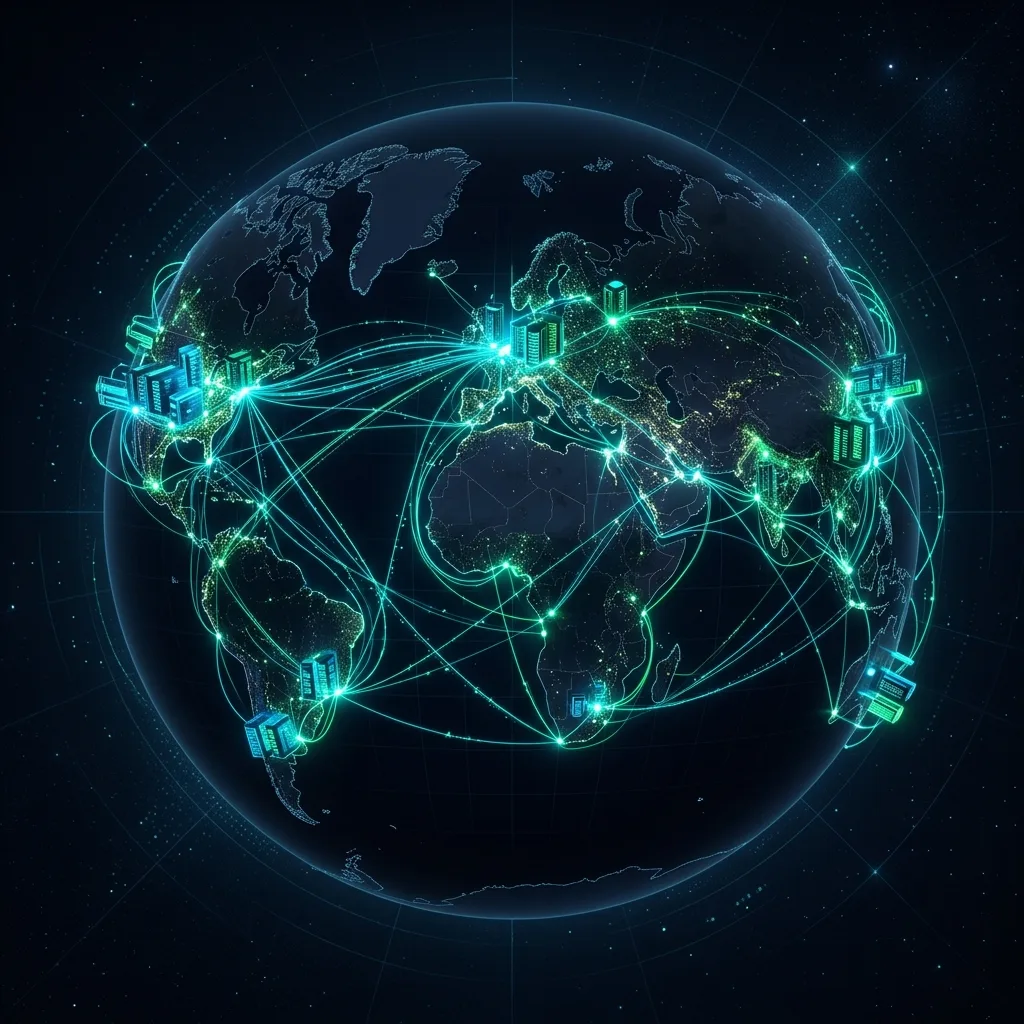
When a brand sponsors an event of this magnitude, they are not just buying television time. They are driving millions of simultaneous users to their websites, applications, and digital platforms. This requires enterprise grade website development to handle massive traffic spikes without crashing.
Website vs Social Media: Strategic Choice for Business Growth in 2026
If your marketing campaign is successful, your website must be ready to receive the influx of visitors. This is where cloud hosting, load balancing, and custom web architecture become non negotiable business assets. A slow website during a major product launch or campaign is a lost opportunity.
Brands investing in the World Cup know that digital infrastructure is the foundation of their return on investment. They rely on seamless user experiences to convert passionate fans into loyal customers.
Why Brands Spend Hundreds of Millions on a Football Tournament
Before we look at specific companies, we must ask why brands spend this kind of money. A World Cup offers a month long event with guaranteed emotional investment. Audiences across every continent are highly engaged.
You get the kind of multi generational and cross cultural attention that no standard ad campaign can manufacture. Brands use this emotional connection to build profound trustworthiness with their audience. Trust is the ultimate currency in both global marketing and digital sales.
In the digital world, this translates to how users perceive your brand through your website and content. A premium website design establishes immediate authority. When users land on a polished and fast loading site, they inherently trust the business behind it.
The underlying logic of World Cup sponsorships is brand positioning. Companies want to be associated with excellence, global reach, and high performance. Your digital footprint must communicate those exact same qualities to your target audience.
The Sponsorship Hierarchy and Tiered Marketing Strategies
FIFA does not just sell sponsorships blindly. The organization sells access, and it prices that access in distinct tiers. Think of it like a corporate building where the higher the floor, the more you pay and the more exclusive your access becomes.
Businesses can learn a lot from this tiered approach. You can structure your own digital marketing and SEO campaigns using a similar hierarchy. You prioritize long term equity while executing highly targeted short term campaigns.
Tier 1 The Long Game of Brand Equity
These are the brands that commit to multi year relationships across all FIFA properties. They do not just show up for one tournament. They sponsor the Women's World Cup, youth tournaments, and esports events.
In return for their massive investment, they receive the broadest possible rights and prominent visibility. The estimated bill for this tier is around 150 to 200 million dollars per four year cycle. The 2026 FIFA Partners include Adidas, Coca Cola, Visa, and Lenovo.
Each of these brands has a clear strategic reason to be here. Visa locks out every other payment network from official stadium transactions. This tactic is about behavioral data and transaction volume rather than just logo visibility.
In digital marketing, this is the equivalent of an enterprise SEO strategy. You are not looking for quick wins. You are building structural dominance in search engine results. By creating authoritative content and earning high quality backlinks, you lock competitors out of the top search positions.
Tier 2 Targeted Market Entry and Regional Focus
This tier is strictly tournament specific. Brands here are not buying long term global equity. They are buying into the 2026 edition to target the massive North American consumer market.
The list includes Bank of America, Frito Lay, McDonald's, Verizon, and Unilever. What is highly strategic here is the category exclusivity. FIFA ensures there is only one bank, one fast food chain, and one telecom provider at this level.
If your competitor is shut out of the biggest sporting event on the planet, that exclusion holds immense value. It acts as a competitive moat. Brands borrow the cultural equity of the event to accelerate recognition in a specific geography.
For local businesses and regional enterprises, this mirrors Local SEO and targeted paid advertising. You want to dominate the search results for your specific industry in your specific location. A highly optimized regional digital strategy ensures your competitors remain invisible to local buyers.
Tier 3 The Operational Layer of Infrastructure
This is the tier most business coverage skips, but it is the most vital from a technical standpoint. Because this tournament spans three enormous countries across 16 host cities, the operational demands are staggering.
Brands in this tier are buying a role in the infrastructure of the tournament itself. Airbnb is the official accommodation partner, integrating directly into the official ticketing application. Salesforce handles customer relationship management and fan engagement platforms.
ExpressVPN covers digital privacy, which shows how data security is now a mainstream corporate concern. Globant manages complex software integrations. These partnerships require serious operational execution, not just a logo on a banner.
This tier represents the backend of your business. It is your custom web application development, your API integrations, and your secure payment gateways. A beautiful website is useless if the operational software behind it fails. Deep technical integration is far harder for competitors to displace than a simple marketing campaign.
25 Benefits of Building a Business Website in 2026
The Kit War and the Power of Visual Identity
Separate from the corporate sponsorship structure, a fierce branding battle happens directly on the pitch. The uniforms the national teams wear are calculated business decisions. Kit sponsorships are about the long term association between a brand and a team identity.
The 2026 tournament reflects a consolidated landscape dominated by three major players. Nike outfits 14 teams, securing the biggest market names like Brazil, France, and the United States. Adidas covers 13 teams, leaning heavily on legacy and European dominance with teams like Argentina and Germany. Puma dresses 9 teams with a strong showing in Africa and South America.
The remaining slots are filled by smaller regional brands. These smaller brands cannot compete on global advertising budgets. However, a surprise run in the knockout stages can put an unknown apparel brand in front of hundreds of millions of viewers overnight.
This kit war teaches businesses about the crucial role of User Interface and User Experience design. Your brand colors, typography, and visual hierarchy are your digital uniform. Consistency across all your digital platforms builds immediate recognition. When a user navigates your website, the visual experience must perfectly reflect your brand identity.
Digital Broadcasting and The Shift to Data Driven Engagement
One of the most significant shifts in global marketing is the move from broadcast television to digital streaming. The media rights landscape for 2026 reflects this massive transition perfectly.
In the United States, FOX Sports handles English coverage while streaming platforms like Peacock take on Spanish broadcasts. In the UK, matches are split across digital players like BBC iPlayer. Streaming platforms offer something traditional television never could.
Digital streaming provides precise targeting, real time behavioral data, and interactive ad formats. When a brand sponsors a streaming broadcast, they are buying deep insights into exactly who is watching and when.
This is the exact strategy businesses must adopt for their own websites. You need advanced web analytics to track user behavior. You need to know where your visitors are clicking, how long they stay on a page, and what content drives conversions. Building a data driven website architecture allows you to make informed business decisions rather than guessing.
Preparing Your Digital Infrastructure for High Traffic
Imagine a stadium built for fifty thousand people suddenly facing a crowd of one hundred thousand. Chaos would ensue. The same principle applies to your business website during a major product launch or successful marketing campaign.
When global brands launch World Cup campaigns, they ensure their servers can handle the load. Scalable website development is an absolute necessity. If a viral social media post sends ten thousand users to your site in ten minutes, your hosting environment must scale automatically.
We build websites with high traffic architecture in mind. Utilizing content delivery networks and optimized code ensures your website loads in under three seconds globally. Search engines reward fast websites with higher rankings, making technical performance a core component of your SEO strategy.
The importance of technical SEO cannot be overstated. Search engine bots need to crawl and index your site efficiently. Clean code, proper tagging, and secure connections build the trustworthiness required to rank above your competitors.
Do Small Businesses Still Need a Website? The 2026 Verdict
Translating Global Marketing into Local SEO Dominance
The 2026 tournament is spread across 16 different host cities in North America. Each city will experience a massive economic boom. Local businesses in these cities have a unique opportunity to capture this foot traffic through Local SEO.
When millions of tourists arrive in cities like Atlanta, Houston, or San Francisco, they will turn to search engines. They will search for restaurants, transportation, retail, and services. Businesses that have optimized their Google Business Profiles will capture this demand.
You do not need a billion dollar budget to win at Local SEO. You need a fast mobile optimized website, localized content, and consistent business citations. Creating dedicated landing pages tailored to specific locations or events is a highly effective strategy for capturing high intent local traffic.
Data Privacy and Security in Global Events
We mentioned earlier that VPN companies and cybersecurity firms are now major sponsors. This highlights a critical shift in consumer awareness. People care deeply about how their data is collected, stored, and used.
For any business operating a website, security is a fundamental requirement. You must ensure your website has proper SSL certificates. If you process payments, your ecommerce platform must be fully compliant with the latest security standards.
Trustworthiness is a core component of the E E A T principles that search engines use to evaluate websites. A site that lacks clear privacy policies or exhibits security vulnerabilities will be penalized in search rankings. Investing in secure web development protects both your customers and your corporate reputation.
Building Competitive Moats Through Content Strategy
We discussed how category exclusivity protects major sponsors. In the digital space, your content strategy is your competitive moat. By producing comprehensive educational content, you establish yourself as the definitive authority in your niche.
When you answer the exact questions your customers are asking, you dominate the search engine results pages. This requires a dedicated approach to content creation. It involves deep keyword research to understand search intent.
Are your users looking for informational content, or are they ready to make a decision? Structuring your website to address every stage of the buyer journey ensures you capture traffic at all levels. A premium digital solutions provider knows how to map this journey visually and technically on your website.
Summary of Business Strategies to Implement
Let us review the core strategies businesses can adapt from global sports marketing.
First, treat your digital presence as a long term investment. Enterprise SEO and premium web design build compounding value over time.
Second, leverage exclusivity. Dominate a specific niche or local market so thoroughly that competitors cannot gain a foothold.
Third, focus on operational integration. Ensure your front end website connects seamlessly with your back end customer relationship management tools.
Fourth, prioritize technical performance. A fast secure website is the foundation of digital trust and search engine visibility.
Finally, utilize data effectively. Let user behavior analytics drive your marketing and development decisions.
How to Grow My Business Online: The 2026 Strategic Guide for MSMEs & Professionals
Elevate Your Digital Strategy with Premium Solutions
The billion dollar strategies deployed during global events are not just for multinational corporations. The underlying principles of strategic positioning, robust technical infrastructure, and data driven engagement apply to every ambitious business. Your website is the global stadium for your brand. It must be built to perform under pressure, designed to captivate your audience, and optimized to dominate your competitors.
If your current digital presence is not delivering the authority and conversions your business deserves, it is time for a professional upgrade. At TenG Spectrum, we specialize in premium website development, enterprise SEO, and comprehensive digital strategies. We build scalable, high performance digital ecosystems that align with your long term business goals.
Do not let your competitors claim the top positions in your industry. Contact TenG Spectrum today to discuss how our expert web development and SEO services can transform your digital footprint and drive measurable business growth. Let us build the digital infrastructure your brand needs to win.
Frequently Asked Questions
Find quick answers to common questions about this topic