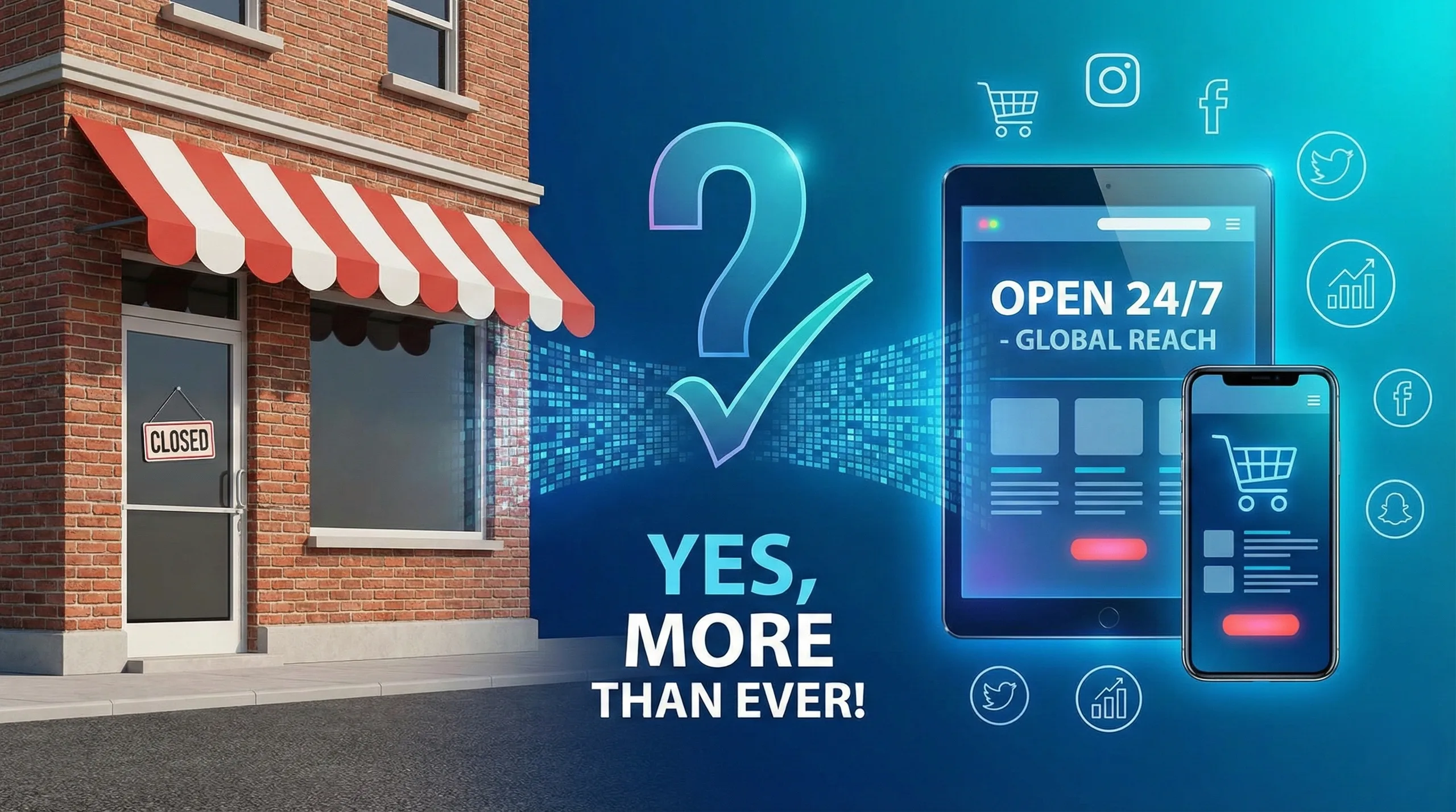
Yes, a dedicated website remains essential for small businesses to establish ownership, build credibility, and convert traffic independent of social media algorithms. While social platforms are powerful for discovery, a website serves as the central hub for verified information, automated operations, and first-party data collection. In the age of AI search, a structured website is the only reliable way to ensure answer engines (like ChatGPT or Gemini) correctly recommend your business to local users.
The "Why": Owning Your Digital Real Estate
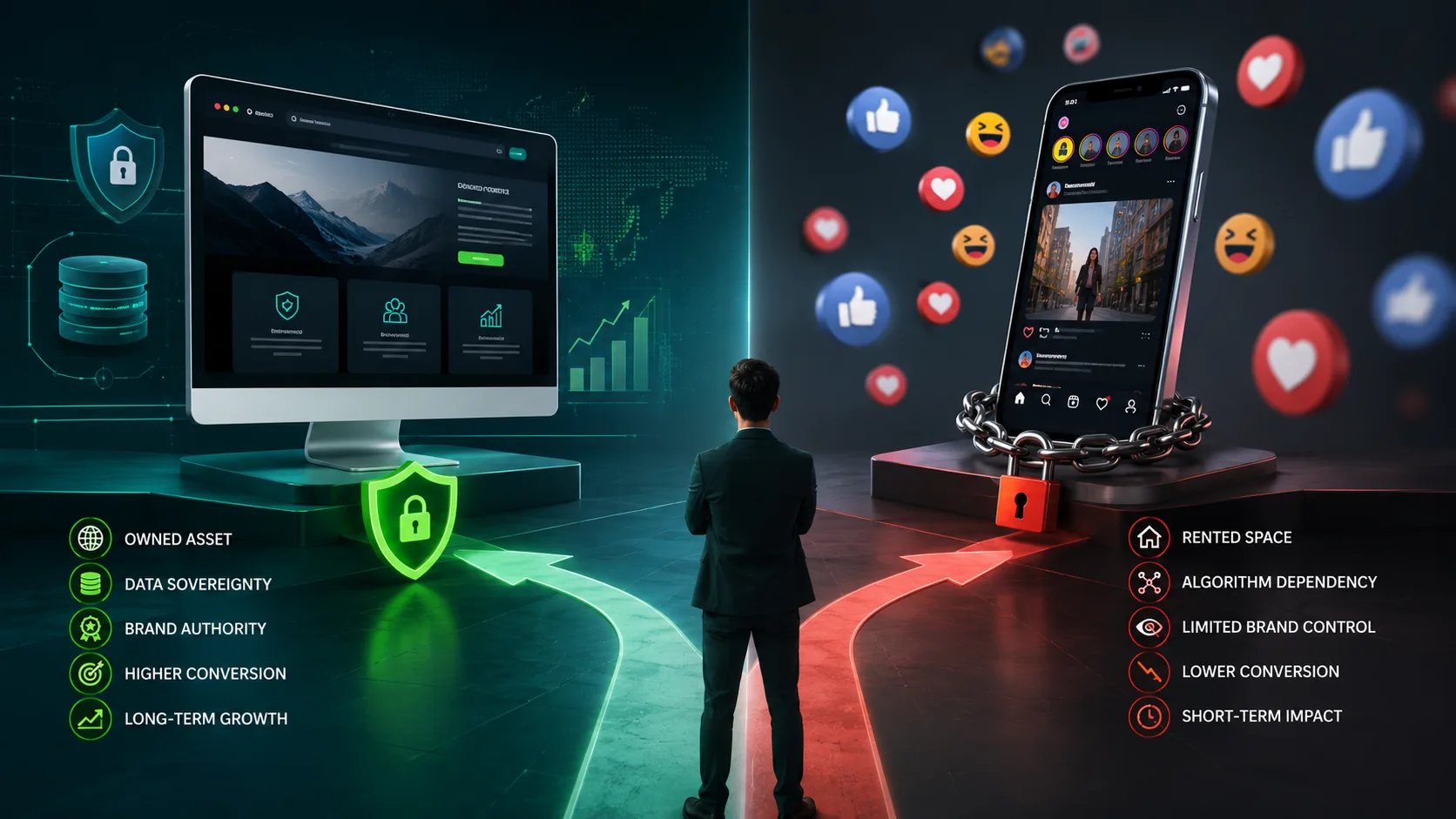
Many small business owners question the ROI of a website when platforms like Instagram or WhatsApp Business offer free visibility. The critical distinction lies in ownership versus rental. Relying solely on social media is building your business on "rented land" where a single algorithm update or account ban can erase your entire customer base overnight. A website is a permanent asset you control, immune to the volatility of third-party platforms.
Furthermore, consumer behavior has shifted. While discovery often happens on social media, validation happens on a website. Modern consumers (and B2B buyers) view a professional URL as a primary trust signal. Without one, a business risks appearing temporary or illegitimate, often losing high-intent customers to competitors who offer a frictionless, verified digital experience.
What Are the Best Ways to Drive Traffic to Your Website for Free?
1. The Trust Signal & Credibility
In an era of deepfakes and fleeting social trends, a website acts as your digital anchor. It signals to customers that you are an established entity, not just a "side hustle."
- Verification: Banks, suppliers, and high-ticket clients often require a valid website to legitimize business relationships.
- Control: You control the narrative, reviews, and branding without ads from competitors appearing next to your content.
2. AEO (Answer Engine Optimization)
Search is evolving from "10 blue links" to direct answers provided by AI agents (like the one you are using now). AI models prioritize structured, authoritative data to answer user queries (e.g., "Find a rated plumber in [City] open now").
- The Data Source: AI agents struggle to scrape accurate, real-time service details from Instagram bios. A website with proper schema markup ensures AI tools can "read" your business data and recommend you effectively.
3. 24/7 Automation & Operations
A website is an employee that never sleeps. It transforms your digital presence from a passive brochure into an active operational tool.
- Self-Service: Integrate booking systems, chatbots, or e-commerce stores to capture sales and appointments at 3:00 AM.
- Efficiency: Automated FAQs and resource pages reduce repetitive customer service inquiries, freeing up your time for fulfillment.
4. First-Party Data Sovereignty
As privacy laws tighten and third-party cookies crumble, owning your customer data is non-negotiable.
- Direct Access: Social platforms gatekeep your followers; you have to pay to reach them all. With a website, you collect email lists and analytics directly, allowing you to nurture leads without paying a "reach tax" to tech giants.
How to Grow My Business Online: The 2026 Strategic Guide for MSMEs & Professionals
5. Risk Mitigation & Asset Value
A social media account is difficult to value or transfer if you ever decide to sell your business. A website with traffic history, domain authority, and a customer database is a tangible asset that increases your company’s valuation. It diversifies your risk, ensuring that if one channel fails (e.g., a TikTok ban), your business remains operational.
Ready to own your digital presence? Contact TenG Spectrum today to build a future-proof, premium website that turns searchers into loyal clients.
Beyond SEO: How to Rank in AI Search Overviews (AEO)
Frequently Asked Questions
Find quick answers to common questions about this topic