The Psychology of Website Design and Its Impact on Business Growth
Most business owners believe customers carefully analyze every detail before making decisions.
In reality, people often form opinions almost instantly.
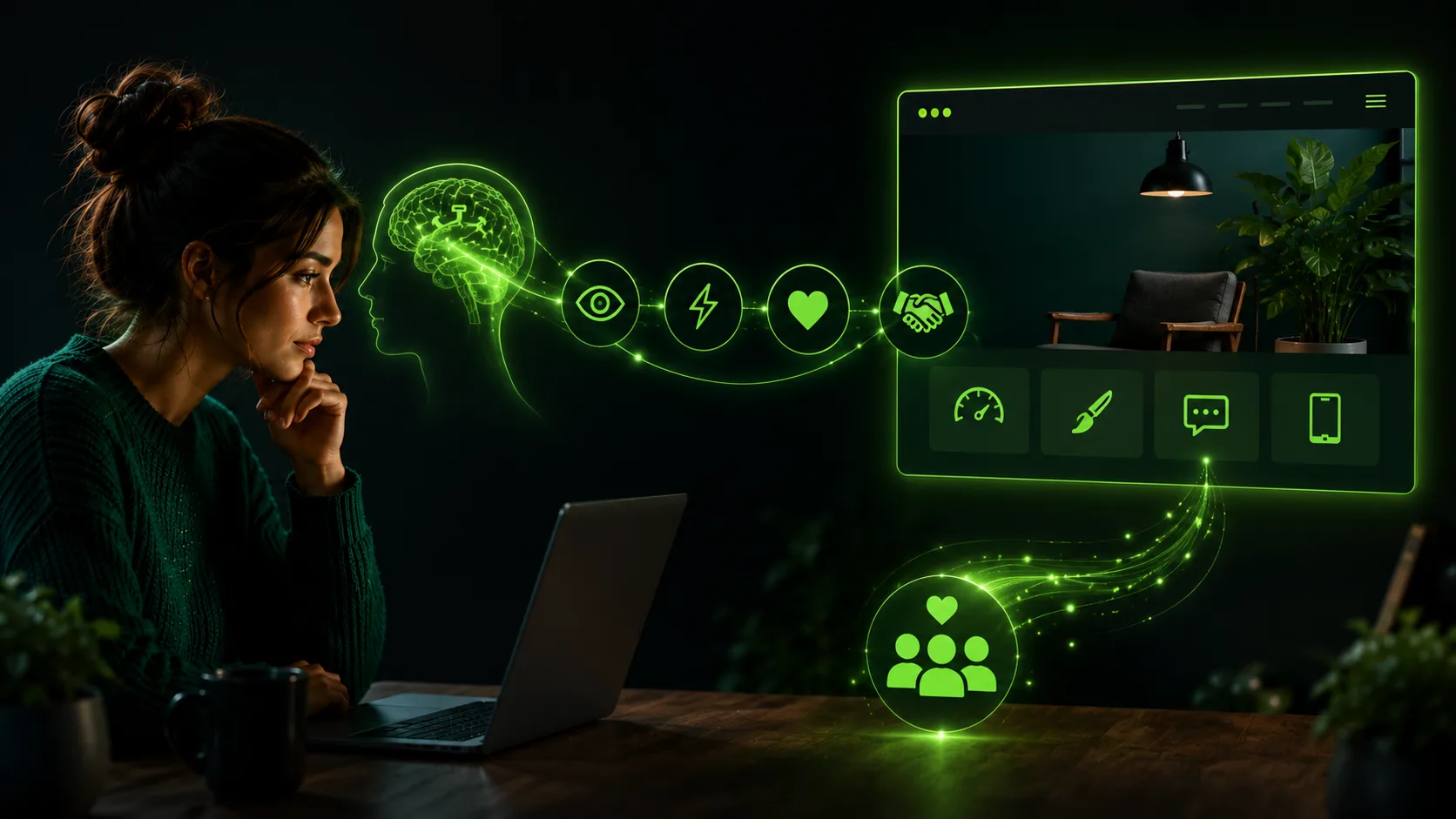
Within seconds of visiting your website, seeing your branding, or interacting with your business online, potential customers begin deciding:
- Is this business trustworthy?
- Does it look professional?
- Can I rely on this company?
- Is this worth my time or money?
These quick judgments happen automatically.
Human psychology is designed to make fast decisions using mental shortcuts. This process affects how people perceive businesses, websites, products, and brands long before they read detailed information.
In today’s digital environment, first impressions are often formed through:
- Website design
- Loading speed
- Branding
- Messaging
- Layout clarity
- Visual consistency
- Professional presentation
A business may offer excellent services, but poor first impressions can still drive customers away before trust ever develops.
This article explains the psychology behind why people judge businesses in seconds and how companies can improve trust, credibility, and customer confidence through better digital experiences.
Why Humans Make Fast Judgments
The human brain constantly processes large amounts of information.
To save energy and make quick decisions, the brain relies on cognitive shortcuts called heuristics.
These shortcuts help people answer questions rapidly:
- Is this safe?
- Is this reliable?
- Should I pay attention?
- Can I trust this?
This behavior evolved as a survival mechanism.
In modern business, these same psychological patterns influence:
- Buying decisions
- Brand perception
- Online trust
- Customer confidence
People rarely evaluate businesses with complete objectivity.
Instead, they form emotional impressions first and justify them logically afterward.
Why Introverted Business Owners Often Build Stronger Customer Trust
First Impressions Happen Faster Than Most Businesses Realize
Research consistently shows that people form visual impressions within seconds.
Online, this happens even faster.
When someone lands on a website, they instantly notice:
- Design quality
- Color choices
- Visual organization
- Readability
- Professionalism
- Speed
- Branding consistency
Before reading detailed content, users already develop feelings about the business.
Those feelings strongly influence whether they:
- Stay on the website
- Explore further
- Submit inquiries
- Trust the company
- Make purchases
This means your website is not just informational. It is psychological.
The Brain Associates Design Quality With Business Quality
One major psychological effect is called the halo effect.
The halo effect occurs when people assume one positive quality means other positive qualities exist too.
For example:
- A professional website suggests professional services
- Clean branding suggests organized operations
- Good design suggests credibility
- Fast performance suggests competence
Even when these assumptions are not fully logical, people naturally make them.
This is why businesses with polished digital experiences often appear more trustworthy, even before customers evaluate their actual expertise.
Why Poor Website Design Damages Trust Immediately
Visitors often interpret poor design as a warning signal.
Common trust damaging website problems include:
- Outdated layouts
- Cluttered pages
- Hard to read text
- Broken elements
- Poor mobile responsiveness
- Low quality images
- Inconsistent branding
- Slow loading speed
These issues create uncertainty.
Customers may subconsciously think:
- “This business looks outdated.”
- “This company may not be reliable.”
- “If the website is poorly maintained, what about the service?”
People connect presentation quality with operational quality.
Website Speed and Human Patience
Speed strongly affects perception.
Modern users expect websites to load quickly.
Even small delays increase frustration.
Psychologically, slow websites create:
- Uncertainty
- Friction
- Doubt
- Impatience
Visitors often interpret slow performance as:
- Poor professionalism
- Technical weakness
- Low reliability
Fast websites create smoother emotional experiences.
This improves:
- Trust
- Engagement
- Conversions
- Customer satisfaction
A fast website feels more competent.
Cognitive Fluency and Why Simplicity Builds Trust
Another important psychological principle is cognitive fluency.
Cognitive fluency refers to how easily the brain processes information.
People trust information more when it feels easy to understand.
Websites with strong cognitive fluency usually have:
- Clear navigation
- Simple layouts
- Readable text
- Organized sections
- Direct messaging
- Consistent visuals
Confusing websites create mental strain.
When users must work hard to understand a business, trust decreases.
Simple communication often feels more credible.
Branding Shapes Emotional Perception
Branding is not just about logos.
Branding influences emotional interpretation.
Customers subconsciously evaluate:
- Color psychology
- Typography
- Tone of voice
- Visual consistency
- Image quality
- Overall presentation
These elements create emotional signals about the business.
For example:
- Minimal branding may feel modern and trustworthy
- Consistent branding feels organized
- Clean typography improves readability and confidence
- Professional visuals create authority
Inconsistent branding creates confusion.
Confused customers rarely feel confident.
Why Consistency Creates Psychological Safety
Humans naturally seek predictability.
Consistency reduces uncertainty.
When businesses maintain consistent:
- Messaging
- Design
- Communication
- Visual identity
- Customer experience
People feel safer engaging with them.
Consistency signals:
- Stability
- Reliability
- Professionalism
- Attention to detail
This applies across:
- Websites
- Social media
- Emails
- Advertisements
- Customer support
Inconsistent experiences weaken trust.
Messaging Shapes Credibility Instantly
People judge businesses based on language very quickly.
Visitors often scan headlines before reading details.
Clear messaging helps users immediately understand:
- What the business does
- Who it serves
- Why it matters
- What action to take next
Confusing messaging increases hesitation.
Overly complicated language can make businesses appear:
- Unclear
- Disorganized
- Less trustworthy
Simple and direct communication improves confidence.
Why Customers Prefer Clarity Over Cleverness
Some businesses try too hard to sound creative or unique.
But psychologically, clarity usually performs better.
People trust businesses they understand quickly.
Instead of vague phrases like:
“Transforming digital paradigms through innovation.”
Clear messaging works better:
“We build professional websites for clinics and small businesses.”
Simple communication reduces uncertainty.
Social Proof and Trust Formation
Humans rely heavily on social proof.
When uncertain, people look at others for guidance.
This is why testimonials, reviews, and case studies are powerful trust signals.
Customers feel more confident when they see:
- Positive reviews
- Real client experiences
- Successful projects
- Professional feedback
Social proof reduces perceived risk.
It reassures visitors that:
- Other people trusted the business
- The business delivered results
- The experience was positive
This helps accelerate trust formation.
Why Testimonials Influence Buying Decisions
Testimonials work because they feel emotionally relatable.
Potential customers often think:
- “This client had a similar problem.”
- “This business seems dependable.”
- “Others had a good experience.”
Detailed testimonials feel more believable than generic praise.
Strong testimonials include:
- Specific results
- Real situations
- Clear outcomes
- Professional presentation
Authenticity matters.
The Role of Visual Hierarchy in Attention
Website visitors do not read pages line by line initially.
They scan visually.
Visual hierarchy guides attention using:
- Headlines
- Font sizes
- Spacing
- Contrast
- Layout structure
- Buttons
- Images
Strong visual hierarchy helps visitors quickly understand:
- What matters most
- Where to focus
- What action to take
Poor visual hierarchy creates confusion.
Confused users often leave quickly.
How to Grow Your Business on Google: The Ultimate 2026 Digital Strategy
Emotional Trust Matters More Than Logic
Business owners often focus heavily on features and technical details.
But customers usually decide emotionally first.
Psychological trust comes from feelings like:
- Safety
- Confidence
- Familiarity
- Professionalism
- Comfort
Logic supports decisions later.
This means businesses must create positive emotional experiences online.
Mobile Experience Shapes Modern First Impressions
Many customers first encounter businesses on mobile devices.
A poor mobile experience damages credibility immediately.
Common mobile problems include:
- Tiny text
- Broken layouts
- Slow loading
- Difficult navigation
- Poor button spacing
Mobile friendly websites create smoother experiences and stronger trust.
Responsive design is no longer optional.
Why Professional Photography Improves Credibility
Visual authenticity matters.
Real business photos often outperform generic stock images because they feel more genuine.
Professional photography can improve:
- Brand perception
- Emotional trust
- Human connection
- Credibility
Customers like seeing:
- Real teams
- Actual office spaces
- Genuine projects
- Real products
Authenticity strengthens confidence.
How Trust Signals Reduce Customer Anxiety
Online purchases always involve uncertainty.
Customers cannot physically verify businesses before contacting them.
Trust signals reduce this anxiety.
Important trust signals include:
- HTTPS security
- Testimonials
- Reviews
- Clear contact information
- Professional branding
- Transparent pricing
- Case studies
- Privacy policies
These signals reassure visitors that the business is legitimate.
Why Businesses Lose Customers Before Conversations Begin
Many businesses lose leads silently.
Potential customers may leave because:
- The website feels outdated
- The messaging is confusing
- Trust signals are weak
- The experience feels unprofessional
This often happens before the business owner even knows the visitor existed.
Improving first impressions can dramatically improve inquiries and conversions.
Common First Impression Mistakes Businesses Make
Overcrowded Websites
Too much information overwhelms visitors.
Clean layouts improve readability and trust.
Weak Branding
Inconsistent branding creates confusion and reduces credibility.
Slow Performance
Slow websites increase frustration and abandonment.
Poor Messaging
Visitors should instantly understand what the business offers.
No Testimonials
Without social proof, customers feel more uncertainty.
Low Quality Visuals
Poor images weaken professionalism.
Practical Ways to Improve First Impressions
Simplify Website Design
Focus on:
- Clean layouts
- Readable typography
- Simple navigation
- Clear structure
Improve Website Speed
Optimize:
- Images
- Hosting
- Mobile performance
- Technical structure
Fast experiences improve trust.
Strengthen Branding
Use:
- Consistent colors
- Professional logos
- Unified design systems
- Clear messaging
Add Trust Signals
Include:
- Testimonials
- Reviews
- Certifications
- Secure browsing
- Clear contact information
Improve Messaging Clarity
Visitors should immediately understand:
- What you do
- Who you help
- Why they should trust you
Comparison: Weak vs Strong First Impressions
| Weak First Impression | Strong First Impression |
|---|---|
| Slow website | Fast loading experience |
| Cluttered layout | Clean design |
| Confusing messaging | Clear communication |
| Inconsistent branding | Unified branding |
| Generic visuals | Professional visuals |
| No social proof | Testimonials and reviews |
| Poor mobile design | Responsive mobile experience |
| Hard navigation | Simple user experience |
Why Digital Credibility Is Now Essential
Today, websites often replace physical first meetings.
Your online presence shapes:
- Customer expectations
- Perceived professionalism
- Trustworthiness
- Brand reputation
Even excellent businesses can lose opportunities if their digital experience creates doubt.
A strong online presence helps businesses:
- Build confidence faster
- Reduce hesitation
- Improve inquiries
- Increase conversions
- Strengthen reputation
Digital credibility has become a core part of modern business psychology.
Conclusion
People judge businesses in seconds because human psychology is designed for fast decision making. Customers rely on visual impressions, emotional cues, cognitive shortcuts, and trust signals long before carefully analyzing details.
Website design, branding, speed, messaging, and consistency all shape how trustworthy and professional a business appears online.
Strong first impressions help businesses build confidence quickly, reduce customer hesitation, and improve conversions. Poor digital experiences can silently drive potential customers away before conversations even begin.
A professional website combined with clear branding and thoughtful messaging creates the kind of trust modern customers expect.
If you want to improve your business website, strengthen online credibility, and create better customer first impressions, TenG Spectrum can help with website development, branding, SEO, and digital strategy services tailored for modern businesses.
Frequently Asked Questions
Find quick answers to common questions about this topic