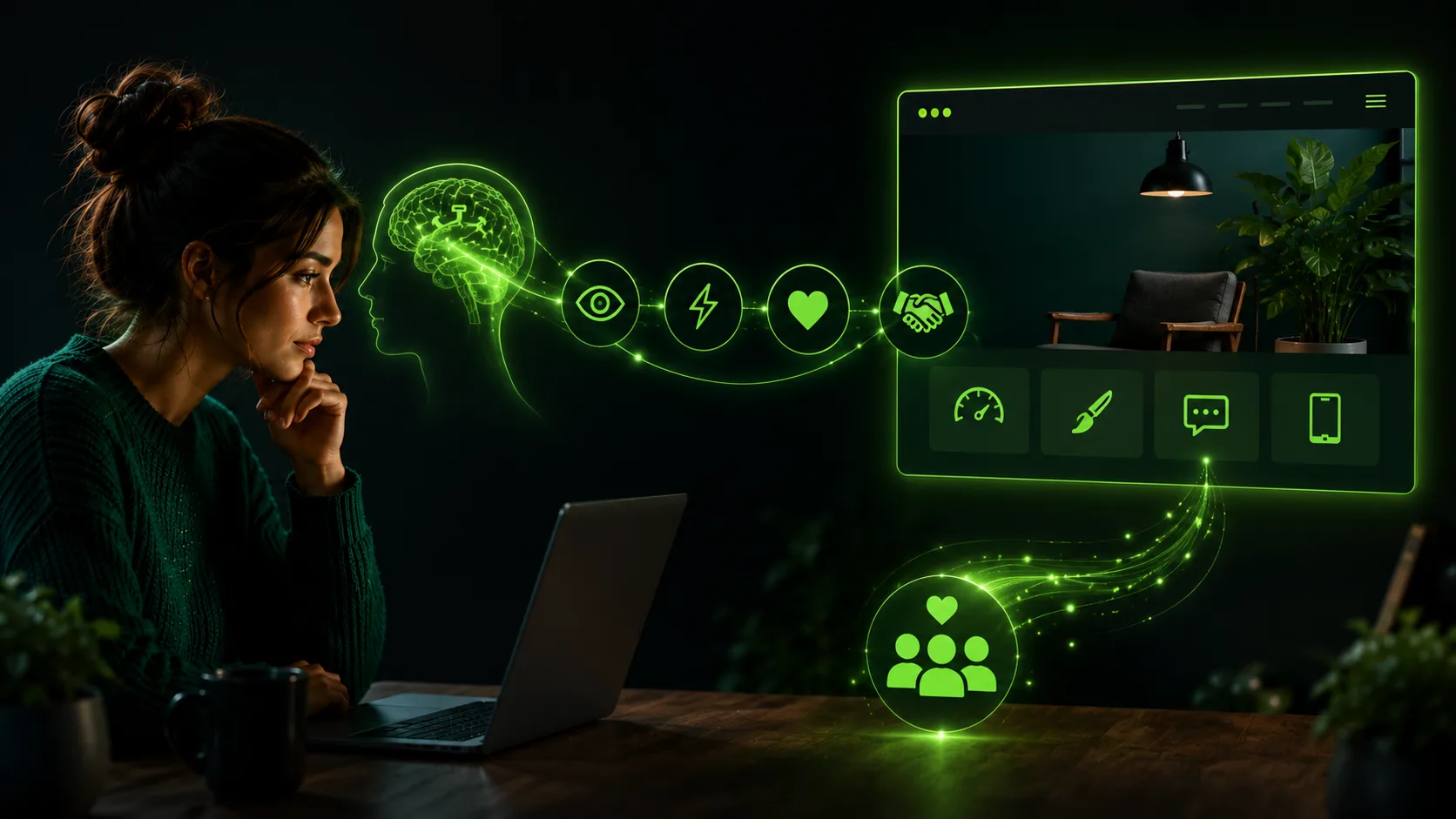

A website is often the first interaction a potential customer has with a business. Within a few seconds of visiting a website, people begin forming opinions about the brand, its credibility, and whether they want to continue exploring.
These decisions are rarely made consciously. Instead, they are influenced by psychology.
The psychology of website design focuses on understanding how people think, feel, and behave when they interact with digital interfaces. When businesses apply psychological principles to website design, they create experiences that feel trustworthy, easy to use, and engaging.
A well designed website does more than display information. It guides visitors, builds confidence, and encourages them to take meaningful action.
Understanding how psychological factors influence user behavior can help businesses improve their websites, increase engagement, and generate more leads and customers.
Why Website Psychology Matters for Businesses
Modern consumers interact with hundreds of websites every week. Because attention spans are short, visitors make quick decisions about whether to stay or leave.
Research consistently shows that users form an opinion about a website in just a few seconds.
During this short window, several psychological factors influence their perception.
These include:
- Visual design
- Page layout
- Content clarity
- Loading speed
- Trust signals
- Ease of navigation
If a website appears confusing, outdated, or difficult to use, visitors often leave immediately.
However, when a website feels intuitive and trustworthy, users are more likely to explore further and engage with the business.
For companies that depend on digital presence, understanding these psychological triggers can make a major difference in performance.
What Is Website Maintenance and Why Ignoring It Costs More Later?
First Impressions and the Power of Visual Perception
First impressions strongly influence how users perceive a business online.
Humans naturally judge visual environments quickly. This instinct comes from our need to evaluate situations rapidly.
When someone visits a website, they subconsciously assess several elements at once.
These include:
- Color scheme
- Typography
- Layout
- Images
- Overall design quality
A clean and modern website immediately signals professionalism.
On the other hand, cluttered or outdated designs may create doubts about the credibility of the business.
Because these impressions happen so quickly, the visual design of a website plays a major role in shaping customer trust.
The Role of Trust in Website Psychology
Trust is one of the most powerful psychological drivers behind online decisions.
Visitors often ask themselves several questions when browsing a website.
These include:
- Is this company legitimate?
- Can I trust this service?
- Is my information safe here?
Websites that address these concerns effectively create a more comfortable experience for visitors.
Several elements help build trust.
Professional Design
A polished and modern interface signals that the business is serious about its operations.
Customer Testimonials
Reviews and testimonials show that real people have already benefited from the service.
Clear Contact Information
Visible phone numbers, email addresses, and office locations reassure visitors that the company is real.
Security Indicators
SSL certificates, payment security badges, and privacy assurances make users feel safe when sharing information.
When these trust signals are present, visitors are more willing to engage with the website.
Cognitive Load and Simplicity in Web Design
Cognitive load refers to the amount of mental effort required to process information.
When websites present too much information at once, users feel overwhelmed.
This often leads to frustration and quick exits.
Effective websites reduce cognitive load by keeping information simple and structured.
Design strategies that help reduce cognitive load include:
- Clear navigation menus
- Short paragraphs
- Logical page layouts
- Visual hierarchy
- Minimal distractions
When users can easily understand what a website offers and how to navigate it, they are more likely to continue interacting with the content.
The Psychology of Colors in Websites
Color plays a significant role in human perception and emotional response.
Different colors can influence how users feel about a brand.
While color meaning can vary across cultures, certain patterns are widely recognized.
| Color | Psychological Association |
|---|---|
| Blue | Trust, stability, professionalism |
| Green | Growth, balance, health |
| Red | Urgency, excitement, action |
| Yellow | Optimism, attention |
| Black | Luxury, sophistication |
For example, many financial institutions use blue because it conveys reliability and trust.
Similarly, green is often used in wellness or environmental industries.
Choosing the right color palette helps create the emotional tone of the website.
Social Proof and Human Decision Making
Humans often look to others when making decisions. This behavior is known as social proof.
When people see evidence that others trust a product or service, they feel more comfortable making the same choice.
Websites can apply social proof in several ways.
Customer Reviews
Positive feedback from real customers builds confidence.
Client Logos
Displaying well known clients or partners increases credibility.
Case Studies
Detailed examples show how the service has delivered results.
User Statistics
Numbers such as the number of customers served or projects completed reinforce reliability.
Social proof reduces uncertainty and encourages visitors to take action.
The Importance of Clear Calls to Action
Visitors rarely take action unless they are clearly guided.
Calls to action help direct users toward the next step.
Examples include:
- Contact us
- Get a quote
- Start a free trial
- Book a consultation
- Download a guide
Effective calls to action use simple and direct language.
They should also stand out visually so visitors can easily identify them.
When calls to action are placed strategically throughout the website, users naturally move toward conversion.
You may also like: The 7Cs of Website Design: A Strategic Framework
The Psychology of Page Speed and Patience
Modern users expect websites to load quickly.
Slow loading pages create frustration and reduce engagement.
Studies consistently show that even small delays can cause visitors to abandon a site.
Fast websites provide several psychological benefits.
They signal:
- Professionalism
- Reliability
- Technical competence
Improving page speed not only enhances user experience but also increases the chances that visitors will stay and explore the website.
Emotional Connection and Storytelling
People are naturally drawn to stories.
Websites that communicate a clear story about the brand, mission, and purpose create stronger emotional connections.
Storytelling helps visitors understand:
- Why the business exists
- What problems it solves
- How it helps customers succeed
When users feel emotionally connected to a brand, they are more likely to trust it and remember it.
Simple storytelling through case studies, brand narratives, and customer success stories can strengthen this connection.
25 Benefits of Building a Business Website in 2026
User Experience and Behavioral Flow
User experience focuses on how easily people can interact with a website.
A smooth user journey guides visitors through several stages.
These stages include:
- Awareness
- Interest
- Evaluation
- Action
A well structured website helps users move naturally through these steps.
For example:
- The homepage introduces the brand.
- Service pages explain solutions.
- Landing pages encourage conversions.
This structured journey aligns with how people typically make decisions online.
Psychological Triggers That Improve Website Conversions
Several psychological triggers can increase the effectiveness of a website.
Businesses often use these triggers strategically.
Scarcity
Limited time offers or limited availability encourage faster decision making.
Authority
Expert credentials, certifications, and professional recognition increase credibility.
Reciprocity
Providing helpful resources such as guides or tools encourages visitors to respond positively.
Consistency
When users take small actions first, they are more likely to continue with larger commitments later.
These triggers influence decision making in subtle but powerful ways.
Common Website Mistakes That Hurt User Psychology
Some website design choices unintentionally create negative experiences.
Common mistakes include:
- Cluttered layouts
- Too many pop ups
- Slow loading pages
- Confusing navigation
- Lack of trust signals
- Poor mobile design
These issues increase frustration and reduce visitor engagement.
Avoiding these mistakes helps maintain a positive user experience.
Conclusion
The psychology of website design plays a powerful role in shaping how visitors perceive and interact with a business online.
From first impressions and visual design to trust signals and user experience, every element influences how users feel and behave.
Businesses that understand these psychological principles can create websites that feel intuitive, credible, and engaging.
Instead of simply presenting information, effective websites guide visitors through a clear journey that leads to meaningful action.
When psychology and design work together, websites become powerful tools for building trust, generating leads, and supporting long term business growth.
If your business wants a website designed around real user behavior and proven digital strategy, the team at TenG Spectrum can help. Contact TenG Spectrum to discuss professional website development, user experience design, and digital growth solutions tailored to your business goals.
Frequently Asked Questions
Find quick answers to common questions about this topic