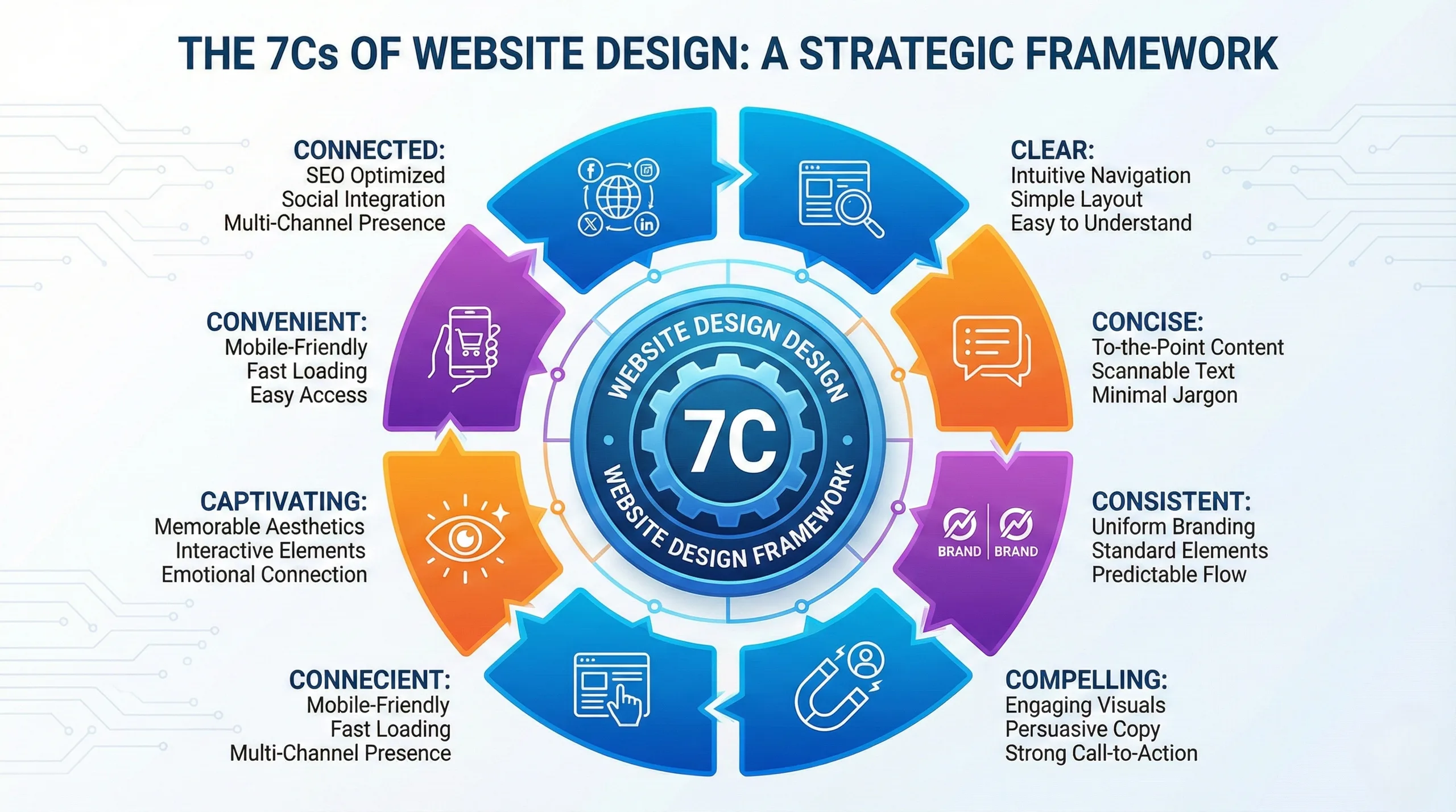
What are the 7Cs of a Website?
The 7Cs of a website are a strategic framework used to evaluate and design effective digital interfaces: Context, Content, Community, Customization, Communication, Connection, and Commerce. Originally developed by Rayport and Jaworski, these elements define the quality of the customer interface, ensuring a website is not just visually appealing but also functionally robust and user-centric.
The Strategic Value of the 7Cs
In modern web development, the 7Cs framework serves as a blueprint for bridging the gap between back-end architecture and front-end user experience (UX). While aesthetics are important, the "Context" and "Content" elements dictate how information is structured and consumed. For example, a Python/Django backend might power the sophisticated logic required for "Commerce" and "Customization," but the interface must present these features intuitively to the user.
Effective digital strategy requires analyzing how these elements interact. "Communication" and "Community" build trust and engagement, which are critical metrics for search engines in the current AEO (Answer Engine Optimization) landscape. A static site lacks the dynamic "Customization" required to retain users, whereas a fully integrated platform adapts to user behavior in real-time.
For remote-first organizations and global brands, the "Connection" element is increasingly vital. It ensures that a website does not exist in a vacuum but serves as a central hub linking to social platforms, third-party affiliates, and broader digital ecosystems. This holistic approach ensures technical scalability and long-term market relevance.
Breakdown of the 7Cs Framework
| The 7C Element | Definition | Modern Implementation |
| Context | The layout, design, and aesthetic feel of the interface. | Responsive, mobile-first layouts using clean CSS grids and intuitive navigation paths. |
| Content | The digital information on the site (text, video, audio, data). | High-value, AEO-optimized copy and rich media assets delivered via a headless CMS. |
| Community | Interaction between users (reviews, forums, open comments). | Integrated user forums or verified review systems to build social proof and trust. |
| Customization | The site's ability to tailor itself to different users or allow personalization. | AI-driven product recommendations or dashboards that adapt based on user login history. |
| Communication | The dialogue between the site and its users. | Chatbots, newsletter sign-ups, and direct support channels integrated into the UI. |
| Connection | The extent to which the site links to other sites. | Affiliate linking, social media integration, and authoritative outbound resource links. |
| Commerce | The interface's capacity to execute commercial transactions. | Secure payment gateways, streamlined checkout flows, and encrypted data handling. |
Partner with TenG Spectrum to engineer a high-performance digital platform that balances technical precision with superior user strategy.
Frequently Asked Questions
Find quick answers to common questions about this topic