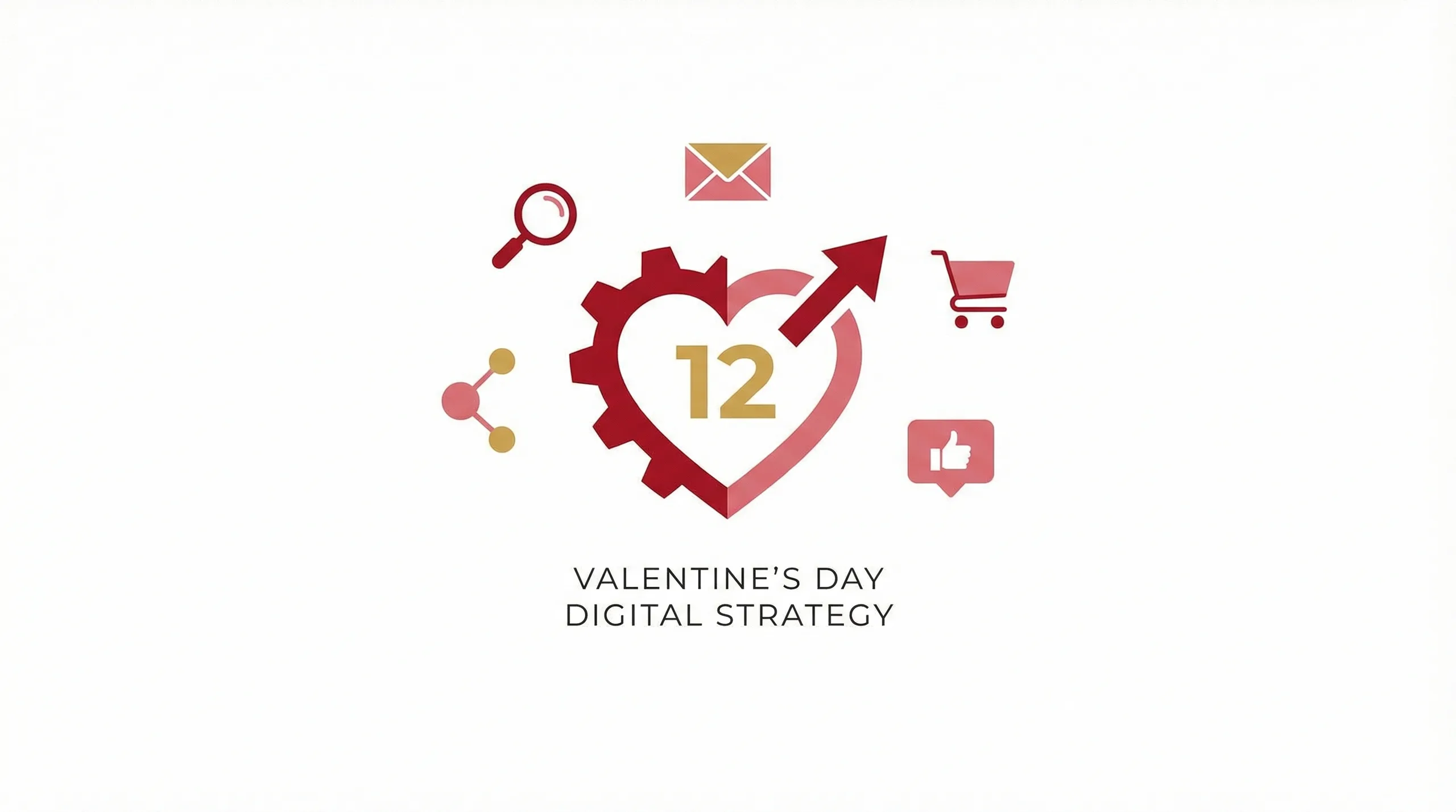
12 Strategic Valentine’s Day Marketing Ideas to Boost Revenue in 2026
The holiday season decorations have barely returned to storage, yet the retail and digital commerce world is already pivoting toward the next major revenue opportunity. For businesses operating in the digital space, there is no downtime between the winter holidays and the mid-February rush.
Valentine’s Day has evolved significantly from a card-and-flower tradition into a massive economic event. In 2025, consumer spending for the holiday reached a staggering $27.5 billion. For 2026, projections suggest even higher engagement as consumers increasingly turn to online channels to celebrate relationships of all kinds.
At TenG Spectrum, we have observed that successful holiday campaigns require more than just a red banner on a homepage. They require a synergy of technical website performance, targeted content strategy, and creative user engagement. Whether you operate a high-traffic e-commerce platform or a service-based digital business, Valentine’s Day represents a critical opportunity to re-engage customers who may have gone dormant after December.
Below, we detail 12 comprehensive marketing ideas to ignite your sales, backed by the technical and strategic expertise required to execute them effectively.

1. Implement Early Bird Campaigns with Technical Urgency
Procrastination is common among shoppers, but waiting for them to act can be detrimental to your supply chain and server load management. The most successful digital campaigns start early, conditioning the customer to act well before February 14th.
From a technical perspective, this involves setting up automated email workflows that trigger based on user behavior. Rather than a generic blast, consider a tiered approach:
- Tier 1 (Late January): "Early Access" for loyal subscribers using exclusive login tokens.
- Tier 2 (Early February): Public launch with inventory counters.
Digital Implementation Tip: Use countdown timers on your landing pages. However, ensure these are coded efficiently (using lightweight JavaScript) so they do not negatively impact your Core Web Vitals or page load speed. A slow landing page will kill conversion rates regardless of how good the offer is.
Why Does Your Website Need Regular Maintenance?
2. Capture the Last-Minute Market with Digital Goods
Despite best efforts to encourage early shopping, a significant demographic will always shop in the final 48 hours. In the physical world, this is limited by shipping windows. In the digital world, this is an opportunity for instant gratification.
To serve this segment, your website must prioritize "Print-at-Home" or "Instant Delivery" options. This includes:
- Digital gift cards with customizable skins.
- Service vouchers (e.g., spa days, consulting audits, subscriptions).
- Downloadable content or courses.
Strategic Insight: Ensure your checkout process for digital goods is frictionless. Remove shipping address fields for digital-only purchases to reduce cart abandonment rates. This requires specific logic in your e-commerce backend to differentiate between physical and digital SKUs.
3. Engineering Shareable "Hint" Mechanisms
Marketing often targets the recipient, but in the context of gift-giving holidays, you need to target the giver through the recipient. This requires a "Drop a Hint" feature on your product pages.
This acts as a subtle referral system. Instead of a standard "Share" button, implement a specialized form that allows a user to send a branded email to a partner or friend.
The Data Advantage: When a user utilizes a "Drop a Hint" feature, you capture two email addresses: the prospect (the wisher) and the lead (the buyer). This allows for highly targeted retargeting campaigns if the buyer does not convert within a specific timeframe.
4. Redefining the "Romantic Gift" via Visual Storytelling
The definition of romance has shifted. Modern consumers look for meaningful connections rather than clichés. If you sell products that are not traditionally romantic—such as software, hardware, or home goods—you must pivot your visual storytelling.
A tech company might market a dual-monitor setup as "The Couple That Games Together." An art supply store might sell "Date Night Paint Kits."
UX/UI Consideration: Update your product photography and website color palette temporarily. You do not need to redesign the whole site. Using CSS overlays or modifying your hero banner to reflect a softer, more connection-focused aesthetic can increase relevance without requiring a full code deployment.
5. The "Galentine’s" and Best Friend Sector
There is substantial data indicating that consumers spend heavily on friends during this season. "Galentine’s Day" (celebrated on February 13th) has moved from pop culture reference to a legitimate retail event.
To capitalize on this, structure offers that benefit the pair.
- BOGO Logic: Buy One, Give One.
- Referral Bonuses: "Give your friend $20, Get $20."
Technical Execution: This requires robust cart logic. The discount must trigger only when specific conditions are met (e.g., two distinct items from a "Besties" collection are added). Ensure your development team tests these discount rules thoroughly to prevent coupon abuse.
6. Parent-Child Bonding Campaigns
Valentine’s Day is increasingly seen as a family holiday. Parents look for ways to make children feel special, and adult children look for ways to honor parents.
For restaurants and event spaces, this means optimizing reservation systems for larger tables rather than just tables for two. For e-commerce, it implies creating "Family Bundles."
Segmentation Strategy: Utilize your CRM data to identify customers who have previously purchased children’s items. Create a segmented email campaign specifically for this demographic with the subject line focused on "Little Loves" rather than romantic partners.
How to Grow My Business Online: The 2026 Strategic Guide for MSMEs & Professionals
7. The Pet Industry Vertical
The pet industry consistently outperforms general retail growth. Many consumers are more likely to buy a treat or toy for their dog than a gift for a coworker.
If you have a general store, create a specific "For Your Furry Valentine" collection page. This aids in Search Engine Optimization (SEO). People search for "Valentine’s dog outfit" or "heart shaped cat treats." By aggregating these products onto a single landing page with optimized metadata, you increase your chances of ranking for these long-tail keywords.
8. The Self-Care and "Anti-Valentine" Angle
Not everyone is in a relationship, and many who are still value self-care. Positioning your products as a reward for the buyer is a powerful psychological trigger.
Marketing copy should shift from "Gift this" to "Treat yourself." High-end skincare, technology upgrades, and comfort goods perform well here.
Content Strategy: Create blog content around "Why you deserve the best this February." Internal linking from this content to high-margin premium products can drive Average Order Value (AOV) upward.
9. Algorithmic Bundling for Higher AOV
One of the most effective ways to increase revenue without acquiring new traffic is to increase the Average Order Value. Gift bundles are the physical manifestation of this strategy.
Instead of relying on manual bundling, use dynamic bundling plugins or custom scripts.
- Dynamic logic: "Add a box of chocolates to your flower order for only $10 more."
- Threshold logic: "Spend $100 on the Valentine’s Collection and get free expedited shipping."
Development Note: These bundles should be treated as unique inventory units or managed via composite product settings in your e-commerce platform to ensure inventory tracking remains accurate across individual components.
10. Selling Experiences Over Things
The "Experience Economy" is booming. Consumers often prefer memories over physical items. If you sell services, workshops, or digital subscriptions, this is your prime time.
- Virtual Events: Cooking classes, wine tastings, or art workshops.
- DIY Kits: Combining a physical product with a digital tutorial.
Schema Markup: If you are selling events (even online ones), ensure your web development team implements "Event" Schema markup. This allows Google to display your event details (date, time, ticket price) directly in the search results, significantly increasing click-through rates.
11. The SEO-Driven Gift Guide
A well-constructed gift guide is a cornerstone of holiday SEO. It serves as a content hub that links out to various product pages, passing link equity and guiding the user journey.
Structuring for SEO:
- Title: "The Ultimate Valentine’s Day Gift Guide for [Target Audience] in 2026."
- Categorization: Break the guide down by persona (e.g., "For the Tech Geek," "For the Foodie").
- Internal Linking: Ensure every product mentioned links directly to the transactional page.
This content should be published at least 3-4 weeks prior to the holiday to allow search engines time to crawl and index the page.
12. Interactive Campaigns and Gamification
Static ads are easy to ignore. Interactive experiences drive engagement. Consider a "Valentine’s Day Gift Generator" quiz.
- Question 1: Who are you shopping for?
- Question 2: What is their style?
- Question 3: What is your budget?
The Technical Payoff: A quiz acts as a consultative sales tool. The user gives you their preferences, and your algorithm presents the perfect product. This reduces decision paralysis and creates a personalized user experience (UX) that feels bespoke rather than generic.
Technical Execution: Preparing Your Website for the Rush
Even the most brilliant marketing ideas will fail if the digital infrastructure cannot support them. At TenG Spectrum, we emphasize that marketing and development must work in tandem.
Mobile-First Optimization
Over 60% of holiday shopping traffic occurs on mobile devices. Ensure your pop-ups are compliant with mobile usability standards (avoiding intrusive interstitials that block content). Check that tap targets (buttons) are large enough for thumb-scrolling and that the checkout flow is seamless on smaller screens.
Site Speed and Core Web Vitals
A one-second delay in page load time can result in a 7% reduction in conversions. Before launching your campaign:
- Compress all campaign imagery using Next-Gen formats (WebP).
- Minify CSS and JavaScript files.
- Utilize a Content Delivery Network (CDN) to serve assets quickly to global users.
Do Small Businesses Still Need a Website? The 2026 Verdict
Security and Trust Signals
During high-transaction periods, users are hyper-aware of security. Ensure your SSL certificates are up to date. Display trust badges (payment processor logos, security seals) prominently near the "Checkout" button to reassure first-time visitors.
Conclusion: Turning Seasonal Spikes into Long-Term Growth
Valentine’s Day offers a lucrative opportunity to inject revenue into the first quarter of the year. However, the difference between a mediocre campaign and a record-breaking one often lies in the execution. It requires a blend of creative marketing ideas, robust technical infrastructure, and data-driven decision-making.
From setting up complex email automation flows to ensuring your e-commerce platform is optimized for mobile conversions, the digital workload can be immense. You do not have to navigate this landscape alone.
Is 2026 the worst time to start a business — or the most honest one?
Ready to elevate your digital presence?
At TenG Spectrum, we specialize in high-end web development, SEO strategy, and comprehensive digital solutions. Whether you need a campaign-ready landing page, a site speed audit, or a long-term content strategy, our remote team of experts is ready to assist.
Contact TenG Spectrum today to discuss how we can engineer your digital success for Valentine’s Day and beyond.
Frequently Asked Questions
Find quick answers to common questions about this topic