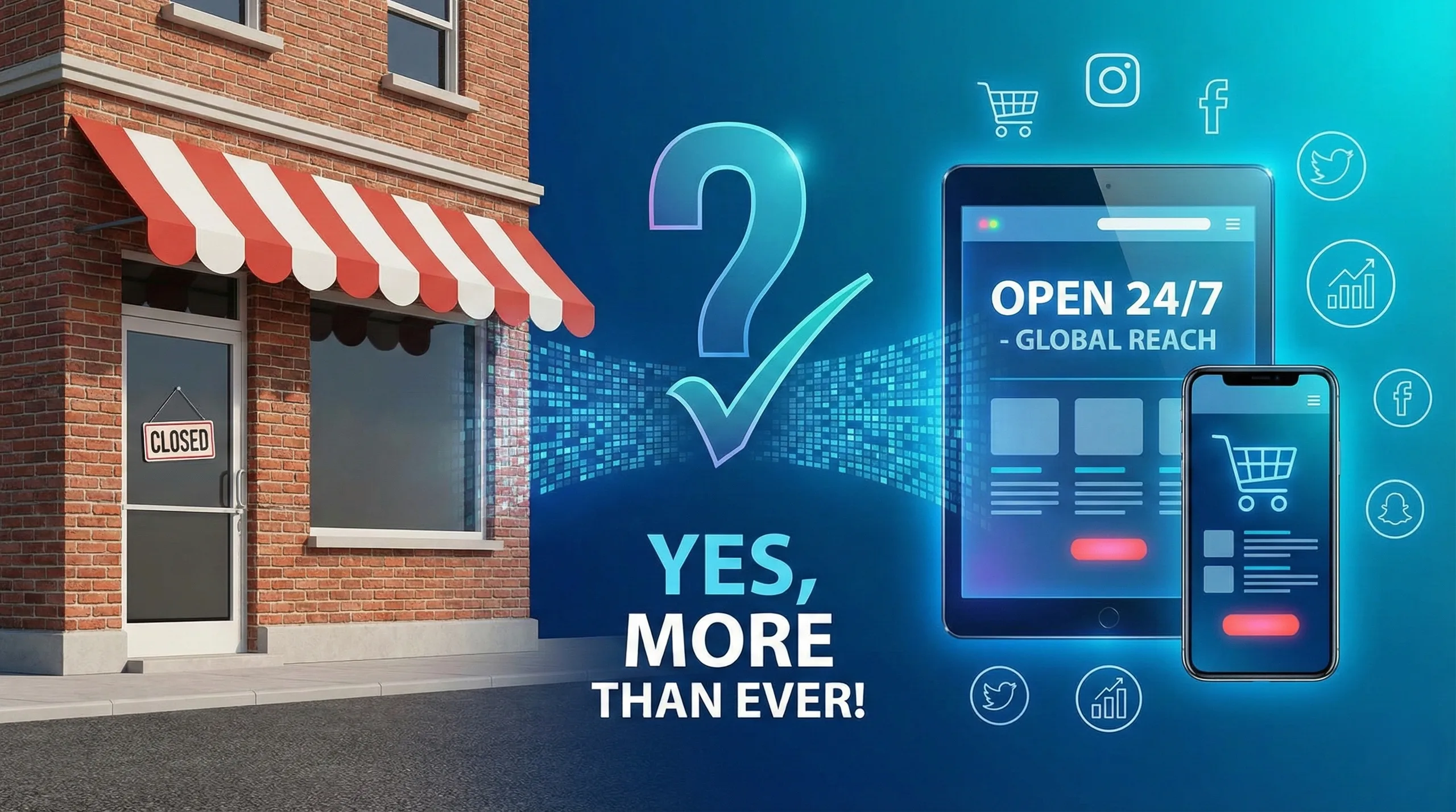
No, 2026 is not the worst time to start a business; it is the most disciplined time. While easy capital has vanished, the current economic climate favors lean, digital-first service models that solve immediate, high-value problems rather than relying on speculative growth.
The "Why": From Hype to ROI
The economic landscape of 2026 has shifted from consumption-led abundance to investment-led efficiency. The "growth at all costs" era is effectively over. Investors and consumers alike now demand measurable Return on Investment (ROI) from day one. This environment punishes bloated operations but rewards agility. For new founders, this is an advantage: you are building on a foundation of reality, not inflated valuations.
Consumer spending hasn’t stopped; it has "reset." Buyers are prioritizing essential solutions and value-driven experiences over discretionary excess. They are still spending, but the decision cycle is more rigorous. A business starting now doesn't need to convince customers to spend money they don't have; it needs to prove that its solution is indispensable.
101 Best Business Ideas in India for 2026: Low Investment & High Profit
Technologically, we have moved from AI experimentation to "Standard Operating Procedure." Tools that were novelties two years ago are now affordable infrastructure. A 2026 startup can operate with a fraction of the headcount required in 2023 by leveraging modular AI agents and automated workflows. This allows for higher margins and faster pivots, making this year uniquely suited for bootstrapping high-quality service businesses.
1. The Rise of "Agentic" Efficiency
In 2026, automation has evolved into "Agentic AI" systems that don't just generate text but execute complex workflows autonomously. For a new business, this acts as a force multiplier. You no longer need a large team to handle customer support, data analysis, or lead generation. Small, specialized teams can now compete with enterprise-level output, dramatically lowering the barrier to entry for premium service providers.
2. The "Spending Reset" Opportunity
While discretionary retail spending has normalized, corporate investment in efficiency is accelerating. Businesses are aggressively funding solutions that reduce their overhead or secure their supply chains. If your new venture offers B2B digital transformation, cybersecurity, or operational streamlining, you are entering a market with urgent, pre-allocated budgets.
3. Lean is the New Luxury
Bloated agencies are struggling to justify their retainers, creating a vacuum for lean, remote-first consultancies. Clients are tired of paying for overhead they don't see. They want direct access to expertise and faster turnaround times. A remote-first model—like the one championed by TenG Spectrum—aligns perfectly with this demand, offering premium output without the "big firm" administrative bloat.
How to Build a Hospital Website: The Complete 2026 Guide for Healthcare Leaders
4. Weak Competition Exits the Market
Economic pressure acts as a filter. "Zombie companies"—businesses kept alive only by cheap debt—are exiting the market, clearing the playing field. A new entrant in 2026 faces less noise from low-quality competitors. If you launch now, you are competing primarily on merit and value, which is a far more winnable battle than competing on ad spend alone.
Beyond SEO: How to Rank in AI Search Overviews (AEO)
Frequently Asked Questions
Find quick answers to common questions about this topic