In the modern digital landscape, a website serves as the primary storefront for any business. However, many organizations find themselves in a frustrating position: they have a beautifully designed website and consistent traffic, yet the lead generation numbers remain stagnant. This phenomenon is often referred to as the leaky bucket syndrome, where potential customers enter your digital ecosystem but exit before taking any meaningful action.
Understanding why a website fails to convert requires a deep dive into technical performance, psychological triggers, and strategic visibility. It is rarely a single issue that halts progress. Instead, it is usually a combination of friction points that discourage users from engaging.
This guide explores the foundational reasons for low conversion rates and provides actionable strategies to transform your website into a high-performing lead generation engine.
The Disconnect Between Traffic and Conversion
Many business owners confuse traffic with success. While high traffic is a positive indicator of brand awareness, it is a vanity metric if those visitors do not convert into leads. Lead generation is the process of attracting and converting strangers into someone who has indicated interest in your company’s product or service.
If your traffic is high but your leads are low, there is a fundamental disconnect between what the user expects and what the website provides. This disconnect can occur at the technical level, the content level, or the structural level.
Understanding Search Intent vs. User Action
A common mistake is targeting keywords that bring in the wrong type of audience. For example, if your website ranks for informational queries like "what is web development" but you are selling "premium enterprise software solutions," the visitors are likely students or researchers rather than decision-makers.
To fix this, you must align your SEO strategy with high-intent keywords. Focus on terms that suggest a readiness to purchase or a specific problem that your service solves.
Technical Performance The Silent Lead Killer
Before a user can read your compelling copy or see your portfolio, your website must load. Technical performance is the most critical foundation of lead generation. If a site is slow or broken, the user will leave before they even know what you offer.
Page Loading Speed and Core Web Vitals
Google’s Core Web Vitals have made it clear that user experience is a ranking factor. However, beyond SEO, speed is a conversion factor. Research shows that a one-second delay in page load time can lead to a 7 percent reduction in conversions.
Users today expect instantaneous results. If your website takes more than three seconds to load, you are likely losing more than half of your potential leads to competitors with faster platforms.
25 Benefits of Building a Business Website in 2026
Mobile Responsiveness and Fluidity
A significant portion of B2B and B2C leads are now generated on mobile devices. If your website is merely a "shrunken" version of your desktop site, the user experience will suffer. Forms might be too small to tap, or navigation menus might overlap critical content.
A truly responsive website adapts its layout and functionality to the device. Premium development ensures that the mobile experience is just as intuitive as the desktop experience, removing friction from the lead generation process.
Hosting Infrastructure and Reliability
The foundation of performance lies in your hosting environment. Many businesses opt for cheap, shared hosting plans that result in frequent downtime and slow server response times. Investing in premium, managed hosting provides the stability needed to handle traffic spikes and ensure that your site is always available when a lead is ready to connect.
The Psychology of Design and First Impressions
Design is not just about aesthetics; it is about trust. Within the first few seconds of landing on your site, a visitor makes a subconscious judgment about the credibility of your business.
The Role of Premium Aesthetics
A dated or cluttered design signals that a company may be out of touch or lacking in resources. Conversely, a clean, professional, and minimalist design suggests authority and attention to detail.
At TenG Spectrum, we emphasize that premium design is a functional requirement, not a luxury. A well-designed site guides the user’s eye toward the most important information, such as your value proposition and call-to-action (CTA).
Typography and Readability
If your content is difficult to read, it will not be consumed. The use of high-end typography, such as Montserrat for headings and clean sans-serif fonts for body text, improves the user's ability to process information. Proper line spacing and contrast are essential for keeping users on the page longer.
| Element | Impact on Lead Generation |
| White Space | Reduces cognitive load and highlights CTAs. |
| High-Quality Imagery | Builds emotional connection and demonstrates professionalism. |
| Color Palette | Influences mood and brand perception. |
| Navigation | Determines how easily a user finds the contact page. |
Messaging and the Value Proposition
Even the fastest, most beautiful website will fail if the messaging is unclear. If a visitor cannot tell what you do and how you help them within five seconds, they will bounce.
Solving the Problem First
Many websites focus too much on "we" (e.g., "We are the best," "We have 10 years of experience"). While experience matters, leads care about their own problems. Your messaging should pivot from self-promotion to problem-solving.
State the problem clearly, offer your unique solution, and explain the benefit of choosing your firm. This clarity builds immediate resonance with the right audience.
Using Answer Engine Optimization (AEO)
In the era of AI and voice search, users are asking complex questions rather than just typing keywords. AEO focuses on providing direct, authoritative answers to these questions. By structuring your content to answer specific industry inquiries, you position your brand as a helpful expert before the lead even considers a purchase.
For example, instead of just targeting "SEO services," create content that answers "How long does it take to see ROI from enterprise SEO?" This builds trust and captures leads at the top of the funnel.
Top 5 Reasons Why Cheap Website Development is a Mistake
Navigation and the Path to Conversion
Friction is the enemy of conversion. If a user has to click through five different pages to find your contact form, they probably won't do it.
Simplifying the User Journey
A high-converting website uses a "hub and spoke" model or a linear path that leads the user toward a specific goal. Every page on your site should have a purpose. If a page doesn't contribute to educating the user or moving them closer to a conversion, it should be redesigned or removed.
Strategic Call-to-Action (CTA) Placement
Your CTAs should be visible, compelling, and appropriately timed. A "Buy Now" button on a high-level blog post might be too aggressive, whereas a "Download the Guide" button fits perfectly.
- Primary CTA: High-contrast button in the navigation bar (e.g., "Get a Consultation").
- Secondary CTA: In-text links or sidebar buttons (e.g., "View Our Portfolio").
- Transactional CTA: Placed at the bottom of service pages.
Trust Signals and Credibility
In a remote and digital-first economy, trust is the currency of lead generation. Since you cannot meet every client in person, your website must do the heavy lifting of building rapport.
Social Proof and Testimonials
Nothing builds trust faster than seeing that others have successfully worked with you. Detailed testimonials, case studies with measurable results, and logos of past clients act as powerful social proof.
Instead of generic quotes like "Great service," aim for specific results such as "TenG Spectrum helped us increase our organic leads by 40 percent in six months."
Security and Data Privacy
With increasing concerns over data privacy, a lack of an SSL certificate or a confusing privacy policy can be a major red flag. Ensuring your site is secure (HTTPS) and clearly stating how you handle user data builds the confidence necessary for a user to share their contact information.
The Lead Magnet Strategy
Sometimes, a visitor is interested but not yet ready to commit to a full service. This is where a lead magnet becomes essential. A lead magnet is a free piece of value offered in exchange for a user's email address.
Types of High-Value Lead Magnets
- E-books and Whitepapers: In-depth industry insights.
- Checklists: Actionable steps for a specific process.
- Webinars: Educational video content.
- Free Audits: A direct look at the user’s specific problem.
By capturing an email through a lead magnet, you move the lead from your website into an email nurturing sequence, allowing you to build a relationship over time.
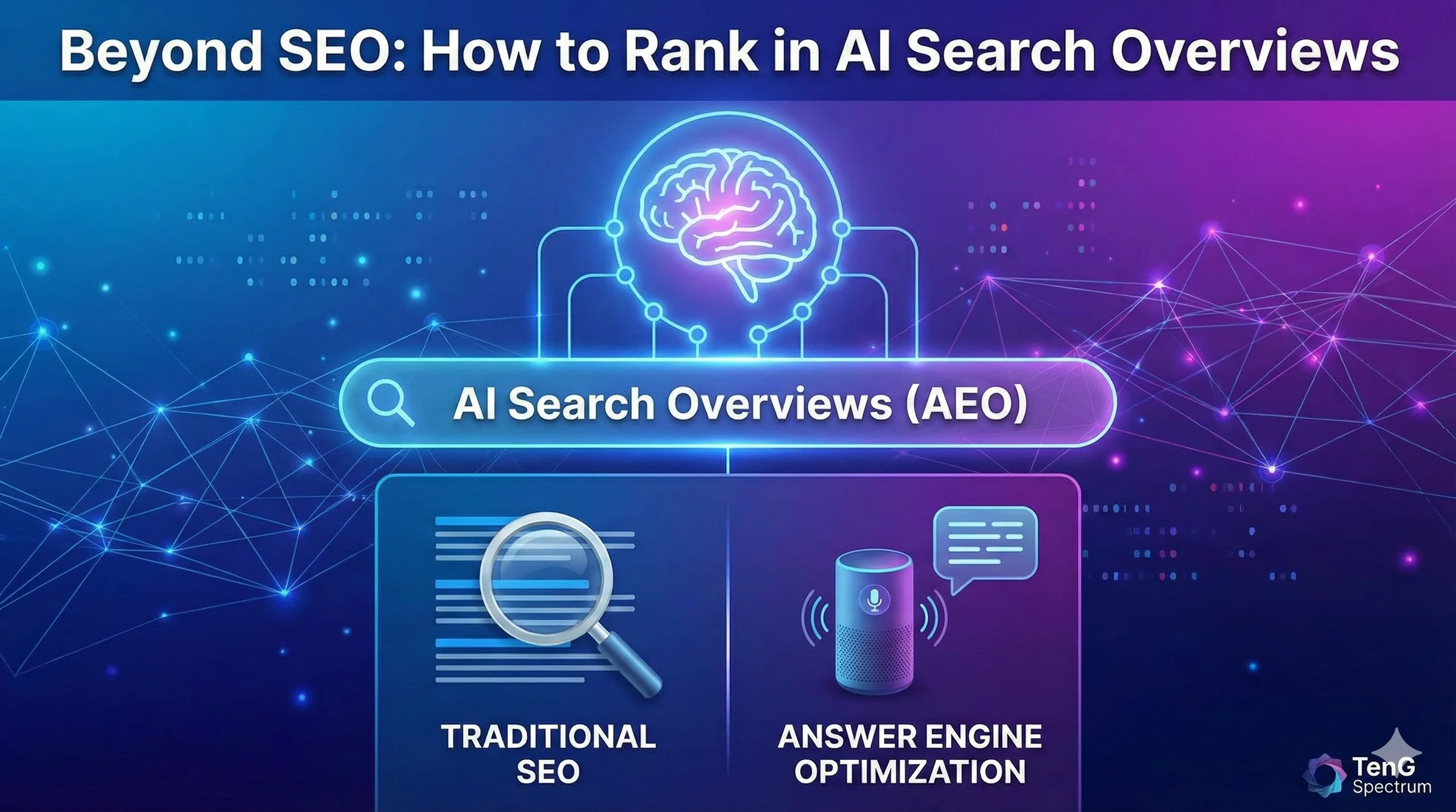
SEO vs. AEO What You Need to Know
Traditional Search Engine Optimization (SEO) is still vital, but Answer Engine Optimization (AEO) is the future of digital discovery.
Optimizing for the Answer
AEO involves optimizing your content for platforms like Google’s Gemini, Perplexity, and voice assistants like Alexa. These engines look for structured data and clear, concise answers. To improve your lead generation, your website must be technically structured with Schema Markup, which helps search engines understand the context of your data.
Long-Tail Keywords and Natural Language
People search differently than they did a decade ago. They use natural language. Instead of "web agency Kerala," they might ask "Who is the best remote web development company for custom Python projects?" Integrating these long-tail, conversational keywords into your blog posts and service pages ensures you are found by users with very specific, high-intent needs.
Data-Driven Refinement
You cannot fix what you do not measure. Many websites fail to generate leads because the owners are guessing what the problem is rather than looking at the data.
Utilizing Analytics and Heatmaps
Tools like Google Analytics 4 (GA4) allow you to see where users are dropping off. If 90 percent of users leave on the pricing page, your pricing may be unclear or poorly positioned. Heatmapping tools show you exactly where people are clicking and how far they are scrolling.
| Metric | Why It Matters |
| Bounce Rate | Indicates if your landing page is relevant to the user. |
| Exit Page | Shows where users lose interest or complete their journey. |
| Conversion Rate | The percentage of visitors who become leads. |
| Time on Page | Reflects the quality and engagement of your content. |
Common Mistakes to Avoid
Even with the best intentions, certain common errors can sabotage your lead generation efforts.
- Too Many Form Fields: Every additional field in a contact form decreases the likelihood of completion. Ask only for what you absolutely need.
- Generic Stock Images: Users can spot generic photos from a mile away. Use authentic imagery or high-end custom graphics to maintain a premium feel.
- Hidden Contact Information: Your contact details should be in the footer of every page and easily accessible via a dedicated page.
- No Follow-Up System: A lead is only valuable if you respond. If your website generates a lead but you don't have an automated or manual follow-up process, the lead will go cold.
Conclusion and Next Steps
Fixing a website that doesn't generate leads requires a holistic approach. It starts with technical excellence, moves through premium design and clear messaging, and concludes with a data-driven strategy for long-term engagement. By addressing the friction points mentioned in this guide, you can transform your website from a passive digital brochure into a proactive lead-generating asset.
Your website should be your hardest-working employee, operating 24/7 to find, educate, and convert your ideal clients. If it is currently failing to do so, the solution lies in a mix of expert development and strategic digital marketing.
Transform Your Digital Presence with TenG Spectrum
Is your website failing to deliver the results your business deserves? At TenG Spectrum, we specialize in building premium, high-performance digital solutions designed to convert visitors into loyal clients. From custom web development and Python-based applications to high-end SEO and AEO strategies, we provide the expertise needed to scale your business in a remote-first world.
Frequently Asked Questions
Find quick answers to common questions about this topic