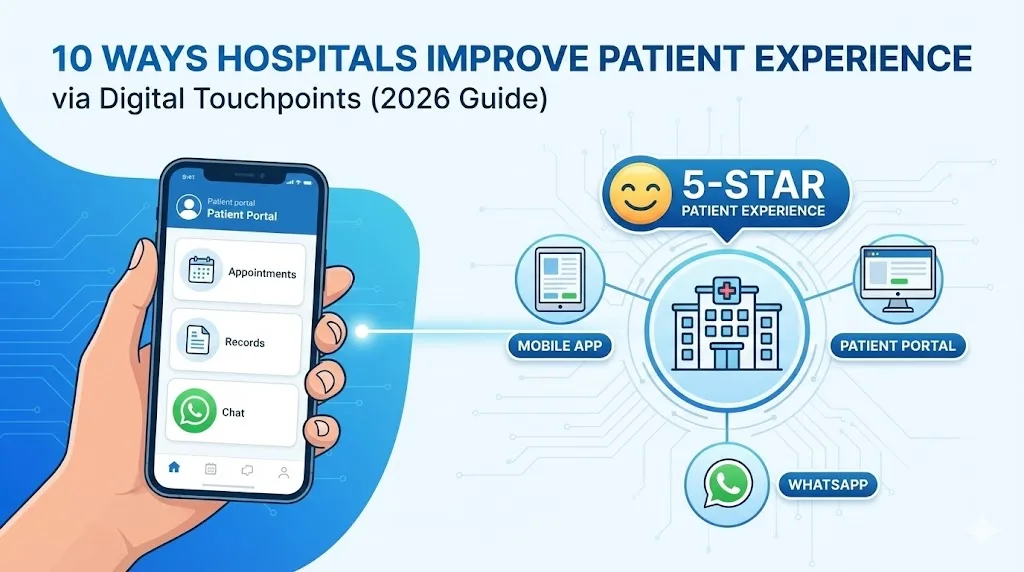
The Digital Evolution of Patient-Centered Care
In the current healthcare landscape of 2026, the patient journey is no longer confined to the four walls of a clinic. The "digital front door" has become the primary point of interaction for modern healthcare consumers. According to a 2025 survey by Athenahealth, over 75% of patients now report that digital tools significantly simplify their healthcare interactions, with a strong preference for mobile-first solutions.
Hospitals that fail to optimize these digital touchpoints risk more than just poor reviews; they face direct financial impacts through lower HCAHPS (Hospital Consumer Assessment of Healthcare Providers and Systems) scores and reduced patient retention. By integrating seamless digital experiences, medical institutions can move from a reactive care model to a proactive, patient-centric ecosystem.
This guide explores ten strategic ways hospitals are leveraging digital touchpoints to revolutionize the patient experience, backed by current industry data and real-world case studies.
1. Streamlining the Digital Front Door with Integrated Portals
How to Build a Hospital Website: The Complete 2026 Guide for Healthcare Leaders
A patient portal is often the first touchpoint after a diagnosis. In 2026, these are no longer just "result repositories" but active care management hubs.
Beyond Lab Results
Modern portals now integrate billing, prescription refills, and historical trends. By allowing patients to view their "health trajectory" through data visualization, hospitals empower them to take ownership of their wellness. This transparency builds the "Information Continuity" that is a core pillar of high-performing health systems.
Reducing Administrative Friction
Portals that allow for digital check-ins and insurance verification before the patient arrives at the facility reduce waiting room anxiety—a top driver of negative patient feedback.
2. Mobile-First Access via Hospital Apps
With over 90% of virtual care visits now occurring on mobile devices, a dedicated hospital app is no longer optional.
The MyMethodist Case Study
Methodist Healthcare (Houston Methodist) successfully launched the MyMethodist app, which allows patients to access virtual urgent care in just three to four clicks. This mobile-centric approach resulted in over 4,500 completed virtual visits within its initial rollout phase, maintaining a patient satisfaction score of 4.9 out of 5.
Key Features of High-Engagement Apps:
- Wayfinding: Real-time indoor GPS to help patients navigate large hospital campuses.
- Biometric Login: Secure, password-less access to medical records.
- Push Notifications: Timely reminders for medication or upcoming appointments.
What is Digital Transformation? The Complete Guide for Businesses
3. High-Velocity Communication with WhatsApp API
While email open rates in healthcare hover around 20%, WhatsApp boasts a staggering 98% open rate. In 2026, leading hospitals are using the WhatsApp Business API for real-time engagement.
Automating the Patient Journey
Hospitals use WhatsApp for proactive "Care Companion" sequences. For example, a patient might receive a message 25 days into a 30-day prescription: "Hi Sarah, your medication is running low. Would you like to order a refill for home delivery?"
Reducing No-Show Rates
Global data shows that the average "No-Show" rate is approximately 23%. By using WhatsApp for automated reminders and two-way confirmation, hospitals have seen these rates drop significantly, as messages are typically read within three minutes of delivery.
4. AI-Driven Virtual Nursing and Triage
To combat the global shortage of healthcare workers—projected by the WHO to reach 10 million by 2030—hospitals are turning to AI-powered digital touchpoints.
The Henry Ford Health Experience
Henry Ford Health implemented virtual nurses to manage routine tasks like admissions, hourly rounding, and discharge education. This allows bedside nurses to focus on high-acuity clinical care without compromising the patient's feeling of being "watched over." This digital touchpoint ensures constant availability without increasing the physical staff burden.
Predictive Triage
Digital intake forms now use AI to flag high-risk symptoms immediately. This ensures that while a patient is still at home, the hospital is already preparing for their arrival, drastically reducing "door-to-treatment" times.
5. Personalized Communication through Big Data
Personalization is the hallmark of premium healthcare. In 2026, hospitals use Data Management Platforms (DMPs) to tailor their communication based on a patient’s specific health journey.
Tailored Health Education
If a patient is diagnosed with Type 2 Diabetes, their digital touchpoints (emails, app notifications, portal dashboard) should automatically pivot to provide relevant nutritional guides and glucose monitoring tips, rather than generic hospital news.
Statistics on Personalization
Data-driven insights suggest that personalized healthcare communication can increase treatment adherence by up to 40%, directly impacting clinical outcomes and reducing hospital readmission rates.
Digital Transformation in Healthcare: How Clinics & New Hospitals Can Grow Faster
6. Real-Time Feedback Loops and HCAHPS Optimization
Traditional HCAHPS surveys are sent weeks after discharge, when memories have faded. Modern digital touchpoints allow for "in-the-moment" feedback.
QR Code Integration
Placing QR codes in patient rooms and waiting areas allows for instant feedback. If a patient reports a "3-star" experience regarding room cleanliness via their tablet, the hospital can deploy housekeeping immediately, resolving the issue before it becomes a permanent mark on a formal survey.
Impact on Reimbursement
In the U.S., HCAHPS scores can affect government funding by up to 3%. Digital tools that facilitate immediate problem resolution are essentially protecting the hospital’s bottom line.
7. Connected Hospital Rooms (The "Smart Room")
The patient's bed is a critical digital touchpoint. Integrating bedside tablets transforms the inpatient experience from passive to active.
Control of the Environment
Smart rooms allow patients to control lighting, temperature, and meal ordering via a tablet. This mirrors the hospitality experience of a premium hotel, which significantly boosts satisfaction scores.
Access to Clinical Notes
Research indicates that giving patients access to their clinical notes during their stay increases trust. Bedside tablets can display the daily schedule, the names of the care team members on shift, and simplified versions of doctor’s notes.
8. Accelerated Record Retrieval and Continuity
Patient experience often suffers when "the left hand doesn't know what the right hand is doing." Digital touchpoints solve the problem of fragmented data.
Case Study: Henry Ford Transplant Institute
By utilizing digital record retrieval services, Henry Ford reduced the time to collect external medical records from two weeks to just 48 hours. For transplant patients, where time is of the essence, this digital efficiency is literally life-saving and reduces the stress of redundant testing for the patient.
9. Leveraging Social Proof and Online Reviews
Patients in 2026 behave like consumers. They look at Google and Yelp reviews before choosing a specialist.
Automated Review Collection
Hospitals now use digital touchpoints to encourage satisfied patients to leave reviews. A simple "Thank you" SMS with a link to the hospital's Google Business profile, sent 24 hours after a successful outpatient procedure, can significantly boost the hospital's digital reputation.
The Credibility Factor
Hospitals with a high volume of positive, recent reviews are 2.8x more likely to achieve top-tier patient loyalty, according to Press Ganey’s 2025 Patient Experience report.
10. Digital Post-Discharge Support
The "cliff" of discharge is where many patient experiences fail. Digital touchpoints extend the care into the home.
Remote Patient Monitoring (RPM)
Wearable devices that sync with the hospital’s mobile app allow clinicians to monitor vitals post-surgery. This gives patients a "safety net," knowing that their medical team is still watching over them digitally.
NHS England: Managing Chronic Conditions
NHS England has utilized its central app to help patients with chronic conditions like diabetes manage their own health. By having test results and prostate cancer markers at their fingertips, patients feel more in control, leading to higher "Likelihood to Recommend" (LTR) scores.
Digital Touchpoint Comparison Table
| Touchpoint | Primary Use Case | Key Benefit | Success Metric |
| Mobile App | Virtual Care & Navigation | Accessibility | App Downloads / Virtual Visits |
| WhatsApp API | Reminders & Refills | 98% Open Rate | Reduced No-Show Rates |
| Patient Portal | Records & Billing | Transparency | Portal Adoption Rate |
| Bedside Tablet | Room Control & Education | Patient Autonomy | HCAHPS Score (Environment) |
| AI Triage | Symptom Checking | Speed of Care | Door-to-Treatment Time |
Conclusion: The Future is Digitally Human
The integration of digital touchpoints is not about replacing the human element of healthcare; it is about enhancing it. By removing administrative burdens and providing patients with the tools they need to manage their health, hospitals can refocus on what truly matters: the patient.
As we have seen from the success of Houston Methodist and NHS England, the hospitals that lead in 2026 are those that treat their digital presence as an extension of their clinical excellence.
Elevate Your Hospital's Digital Experience with TenG Spectrum
Is your medical facility ready to bridge the gap between clinical care and digital convenience? At TenG Spectrum, we specialize in developing premium, high-performance digital solutions for the healthcare sector. From custom mobile apps and secure patient portals to advanced SEO strategies that place your hospital at the top of search results, we provide the expertise needed to transform your patient journey.
Ready to boost your HCAHPS scores and patient retention?
Contact TenG Spectrum today for a strategic consultation. Let’s build a digital ecosystem that delivers world-class care at every touchpoint.
Frequently Asked Questions
Find quick answers to common questions about this topic