
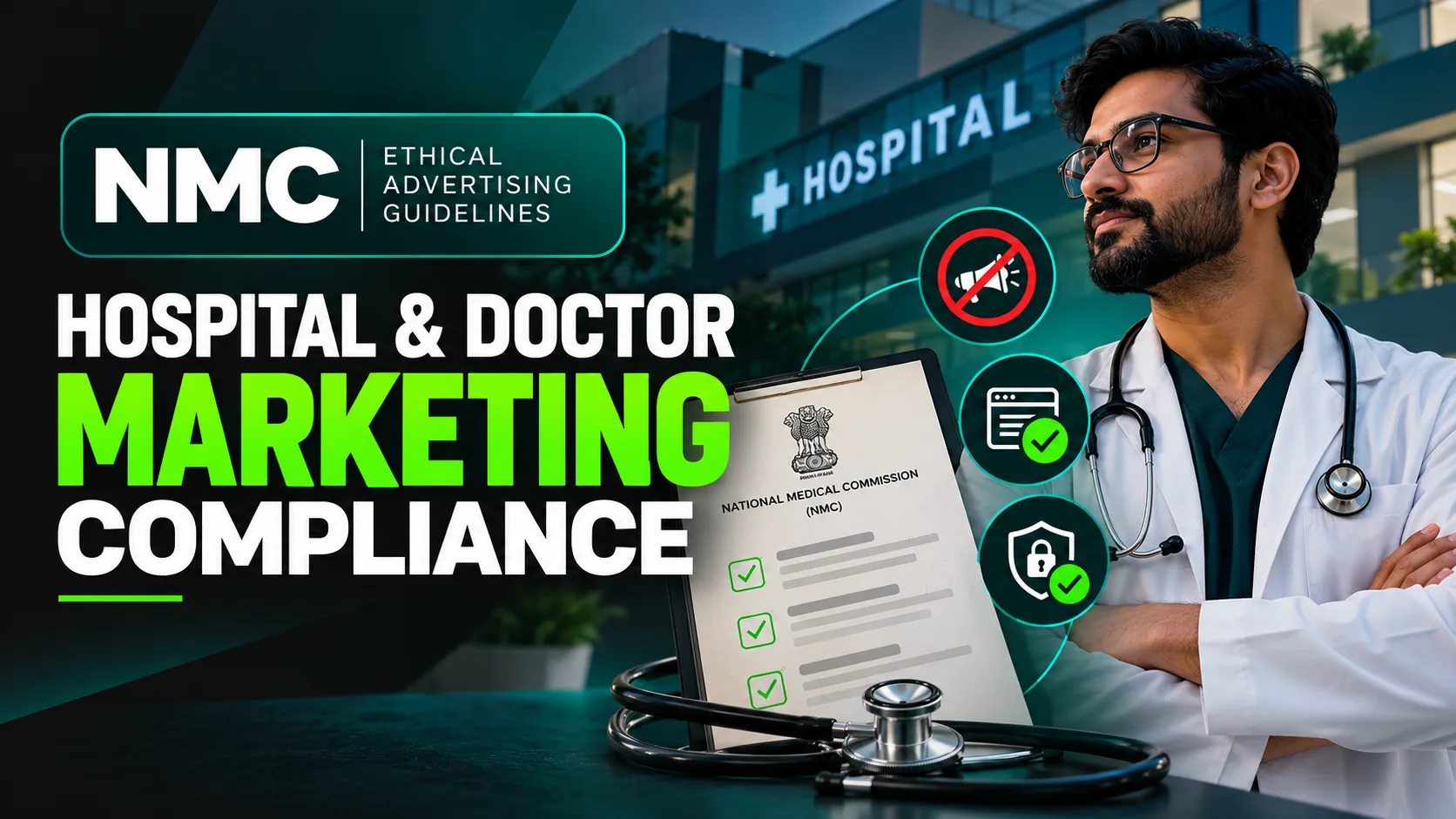
Understanding the New Healthcare Communication Paradigm
The digital presence of medical practices and clinical institutions in India operates under an entirely revised regulatory landscape. On October 6, 2026, the National Medical Commission (NMC), through its Ethics & Medical Registration Board (EMRB), issued a landmark Public Notice and regulatory framework titled "Guidelines on Ethical Advertising and Public Communication by hospitals/medical institutions and Registered Medical Practitioners".
Stemming directly from proceedings in Writ Petition (Civil) No. 1160/2023 before the Hon'ble Supreme Court of India and rooted in the Indian Medical Council (Professional Conduct, Etiquette and Ethics) Regulations, 2002, alongside the National Medical Commission Act, 2019, these guidelines radically redefine how healthcare services are communicated across digital and traditional media.
The core objective of the regulatory shift is explicit: prevent the unrestrained commercialization of healthcare, protect patient privacy, eradicate deceptive medical claims, and maintain professional dignity. For hospital administrators, clinic operators, and Registered Medical Practitioners (RMPs), this marks an end to aggressive growth-hacking marketing tactics.
For healthcare institutions running digital channels, corporate websites, or patient outreach programs, compliance is no longer an afterthought. Digital assets, medical SEO structures, content funnels, and marketing campaigns must align with verifiable, factual, and strictly regulated standards.
Scope and Legal Framework of the NMC Regulations
The guidelines establish an all-encompassing perimeter covering both individuals and corporate clinical infrastructure. Medical professionals and healthcare establishments can no longer operate under separate sets of digital standards.
┌──────────────────────────────────────────────────────────┐
│              NMC Regulatory Framework Scope              │
├─────────────────────────────┬────────────────────────────┤
│ Individual Practitioners    │ Clinical Institutions      │
│ • Registered Medical        │ • Hospitals & Daycares     │
│   Practitioners (RMPs)      │ • Diagnostic Centers       │
│ • Specialist Consultants    │ • Digital Health Aggregators│
│ • Resident Doctors          │ • Polyclinics & Nursing     │
│                             │   Homes                    │
└─────────────────────────────┴────────────────────────────┘
The regulations apply directly to:
- Registered Medical Practitioners (RMPs): Any practitioner registered under Section 31 of the NMC Act, 2019, or with an active entry in a State Medical Register.
- Hospitals and Medical Institutions: Any clinical establishment offering diagnostic, therapeutic, or surgical care for illness, injury, deformity, or pregnancy under Section 2(c)(i) of the Clinical Establishments (Registration and Regulation) Act, 2010, or corresponding State enactments.
- Digital Intermediaries: Health aggregators, directory portals, marketing intermediaries, and consulting agencies publishing content on behalf of medical brands.
Under Clause 4.4, institutions and practitioners cannot avoid legal liability by outsourcing campaigns to third parties. Engaging digital marketing agencies, PR teams, or technical contractors does not absolve the RMP or institution from violations resulting from commissioned, sponsored, or knowingly permitted communications.
Prohibited Marketing Practices: What Healthcare Brands Must Eliminate
Digital marketing in healthcare has frequently relied on performance hooks, social proof, and algorithmic acquisition campaigns. Under Chapter II and Chapter III of the guidelines, many of these conventions are prohibited.
1. Direct and Indirect Patient Solicitation
Practitioners must not solicit patients directly or indirectly, nor engage in fear-based campaigns designed to manufacture artificial demand for clinical procedures or diagnostic screenings. Lead generation campaigns running pay-per-lead models or linking digital agency fees to patient consultations are barred under Clause 8.1(vii) and 8.1(viii).
2. Superlatives and Comparative Claims
Phrases emphasizing market dominance or superiority are prohibited unless backed by verifiable, independent methodology that is made fully transparent. Communications must not claim titles such as:
- "Best Doctor" or "Top Specialist"
- "No. 1 Hospital" or "Leading Clinic"
- "Most Trusted Healthcare Network"
- "Guaranteed Cure" or "100% Success Rate"
- "Miracle Treatment" or "Painless Procedure"
Any public awards or ranking badges used in promotional collateral must disclose the governing parameters, award dates, and exact identity of the awarding body to prevent misleading representations.
3. Reviews, Testimonials, and Patient Endorsements
Patient reviews, video testimonials, and star rating manipulations are strictly controlled. Clause 3.2 (Explanation V) prohibits RMPs and hospitals from procuring, purchasing, soliciting, or sharing patient reviews, testimonials, and endorsements on social media or professional channels. Digital platforms are barred from deploying fake or purchased engagement metrics, inflated review counts, or algorithmic search rank manipulations.
4. Commercial Inducements and Promotional Discounts
Healthcare cannot be marketed as a retail commodity. Clause 8.1(x) bars the use of:
- Limited-time discount vouchers and seasonal sales
- Procedure coupons, cashbacks, or promotional contests
- Free initial procedures aimed at inducing paid treatments
- Referral kickbacks or financial incentives for patient acquisition
Fee structures and diagnostic package prices may be displayed, provided the details remain factual, complete, transparent, and non-promotional.
25 Marketing Ideas for Hospitals to Attract Patients in 2026
Patient Privacy, Media Rules, and Clinical Content
Protecting identity and personal clinical data forms a major pillar of the NMC framework. Standard marketing assets, such as clinical case transformations, require structural revision.
Clinical Images and "Before and After" Collateral
Displaying clinical results, patient recovery arcs, and side-by-side "before and after" surgical pictures for promotional purposes is prohibited under Clause 8.1(v). Clinical case presentations are permitted only within verified academic environments, scientific journals, or peer-reviewed medical discussions, supported by anonymized records and documented consent.
The Limits of Patient Consent
A signed consent form no longer gives medical institutions open clearance to use identifiable media in public ads. Under Clause 6.2, voluntary consent cannot override regulatory prohibitions against public patient endorsements, promotional outcome stories, or before-and-after displays.
Where non-promotional, lawful disclosure of clinical data occurs, Clause 6.4 requires teams to obscure all identifying markers:
- Facial features and recognizable profiles
- Birthmarks, tattoos, scars, and anatomical identifiers
- Real names, admission records, and identifiable demographics
HIPAA vs. DISHA: Website Data Privacy Compliance for Indian Clinics
Data Protection Compliance
Digital communications dealing with personal healthcare information must comply with the Information Technology Act, 2000, and the Digital Personal Data Protection Act, 2023, along with its 2025 enforcement rules. Data processing infrastructure, patient portal integrations, and lead intake forms require explicit encryption, verifiable audit logs, and strict access controls.
Artificial Intelligence in Healthcare Communications
The deployment of automated content engines, generative models, and digital avatars has come under clear regulatory boundaries. The NMC defines AI under Clause 3.3 as automated, self-learning computing processes designed to execute tasks typically requiring human intelligence.
┌──────────────────────────────────────────────────────────┐
│            Permitted vs. Prohibited AI Usage             │
├─────────────────────────────┬────────────────────────────┤
│ Permitted Under Guidelines  │ Prohibited Under Clause 7.2│
│ • Clear AI watermarking on  │ • Synthetic patient        │
│   informational visuals     │   testimonials or avatars  │
│ • Factual patient navigation│ • AI-generated claims of   │
│   and search tools          │   cure or procedure outcome│
│ • Medical literature summaries│ • Unlabeled AI content in │
│   reviewed by clinicians    │   promotional campaigns    │
└─────────────────────────────┴────────────────────────────┘
Clause 7.2 prohibits deploying generative AI to drive purely commercial promotions. Where AI-assisted or generated content is used in permitted informational communications, healthcare providers must observe four mandatory safeguards:
- Mandatory Source Marking: Any promotional or informational media created with AI assistance must display an unmistakable label declaring its artificial origin.
- Zero Synthetic Endorsements: Systems must never generate synthetic patient personas, AI-cloned physician voices, fabricated clinical results, or simulated recovery journeys.
- Accuracy in Diagnosis Representation: Generative models cannot publish unverified diagnostic claims, projected procedure success rates, or speculative medical advice.
- Privacy Safeguards on Model Inputs: Feeding identifiable patient records, radiological scans, or operational notes into third-party, publicly hosted AI platforms violates privacy and medical secrecy guidelines.
Permitted Communications: Building Compliant Healthcare Websites
The NMC framework does not require medical entities to remove their digital footprint. Rather, it shifts focus toward factual, verifiable public utility. Both institutions and individual doctors can publish useful, educational online resources without incurring regulatory penalties.
Permitted Hospital and Institutional Dissemination
Under Clause 8.3 and Clause 9.1, hospitals, clinics, and diagnostic centers are permitted to maintain objective web resources presenting:
- Official corporate name, address, geo-location, and verified phone lines
- Accreditation details (e.g., NABH, NABL, JCI certifications)
- Functional clinical departments and round-the-clock emergency support
- Installed diagnostic infrastructure, imaging machines, and bed strengths
- Factual fee schedules, room charges, and standard package costs
Hospital websites are permitted to host searchable clinician directories. These directories can list medical qualifications recognized by the NMC, official registrations, medical specialties, and outpatient consultation schedules. These directories are classified as essential informational resources rather than commercial promotions, provided they do not feature paid clinician priority ranks or sponsored listings.
Permitted Doctor Announcements and Communications
Clause 8.2 explicitly permits RMPs to publish non-promotional public notices regarding:
- Commencement of new clinical practice
- Changes in clinical specialty or consulting branch
- Relocation of physical clinic address
- Temporary leaves, vacations, or absences from duty
- Resumption or succession of practice
- Official consultation fees
Doctors are also permitted to share educational pamphlets, author peer-reviewed clinical research, and deliver public health awareness talks across television, radio, or web podcasts, provided they do not promote their private practice or solicit new consultations.
Summary of Compliant vs. Non-Compliant Digital Practices
To help administrative and marketing teams audit their online collateral, this comparative reference outlines clear classifications:
| Digital Marketing Asset | Non-Compliant Implementation | Compliant NMC-Ready Implementation |
| Doctor Bio Page | Highlighting unverified success rates, superlative taglines ("City's Premier Surgeon"), and marketing portraits on signboards. | Clear listing of recognized degrees, State/National Medical Register numbers, department, and clinic hours. |
| Procedure Landing Page | "Painless laser surgery, zero downtime, 100% cure rate. Book today for a 20% discount". | Descriptive summary of the condition, procedural mechanism, verified risks, recovery considerations, and standard pricing. |
| Social Media Campaigns | Patient video reviews praising the clinic, and unblurred patient photos. | Public health awareness clips, symptom checklists, and updates on newly installed infrastructure without promotional tags. |
| Platform Doctor Listings | "Sponsored" badges, bid-based search rankings, and paid review packages pushing doctors to top spots. | Transparent directories organized alphabetically, by location, or by specialty with equal profile weight. |
| AI Content & Tools | Synthetic AI patient video reviews and automated blogs without attribution. | AI triage or educational explanations marked with clear source tags confirming their automated origin. |
Enforcement, Disciplinary Actions, and the Appellate Ladder
Non-compliance carries clear administrative and statutory consequences. The NMC guidelines provide State Medical Councils (SMCs) with a tiered disciplinary pathway to address violations under Clause 10.1:
[Level 1: Warning & Ethics Training]
                    │
                    ▼
[Level 2: Censure & Monetary Penalties]
                    │
                    ▼
[Level 3: Suspension of License (3 to 6 Months)]
                    │
                    ▼
[Serious Violations: Immediate Suspension (6 to 12 Months)]
(Misleading cure claims, aggressive mass solicitation)
                    │
                    ▼
[Repeated Offenses: Removal from Medical Register (1 to 3 Years)]
The Legal Process and Appeals
Under Clause 10.2 and 10.3, disciplinary action requires adherence to the principles of natural justice. The regulatory authority must issue a formal Show-Cause Notice, review the practitioner's explanation, and issue a reasoned, speaking order detailing the grounds for its findings.
Should an RMP face adverse disciplinary orders, Clause 11 outlines the statutory appeals route:
- First Appeal: The practitioner can appeal to the Ethics & Medical Registration Board (EMRB) within the National Medical Commission within 60 days of the State Medical Council's order.
- Second Appeal: If the EMRB's decision remains adverse, a second appeal can be filed under Section 30(4) of the NMC Act, 2019, within 60 days of that decision.
- Institutional Violations: Hospitals and corporate medical entities face disciplinary procedures administered through the Clinical Establishments Act and corresponding State rules, alongside parallel action against individual medical directors involved.
Digital Marketing Trends 2026: Strategy, AEO, and Growth Guide
Technical and Operational Audit Checklist for Medical Websites
Transitioning an existing healthcare portal to comply with the NMC framework requires systematic audits across front-end design, back-end data pipelines, and third-party tools.
1. Mandatory Identity and Registration Headers
- Confirm that every doctor profile displays their full name, formal qualifications recognized by the NMC, and their State or National Medical Register (SMR/NMR) registration number.
- Check that clinical facility landing pages display their official Clinical Establishments Act registration credentials and licensing authority details.
2. Website Content and Copywriting Cleansing
- Remove all absolute marketing superlatives, including words like "Best", "Top", "Unrivaled", "Leading", and "No. 1".
- Remove claims of pain-free procedures, 100% cure guarantees, and unconditional outcomes.
- Remove limited-time discount pop-ups, treatment coupon ribbons, and seasonal campaign banners.
3. Review Widgets and Patient Media
- Disable third-party review widgets that pull patient testimonials or five-star ratings directly onto doctor landing pages.
- Remove "Before and After" clinical image galleries and promotional patient transformation stories.
- Audit social media feeds embedded on site pages to ensure they are free from patient endorsements.
4. Technical Architecture and Data Security
- Review digital forms (appointment bookings, contact forms, medical record uploads) to ensure strict adherence to DPDP Act 2023 encryption and consent logging standards.
- Add visible, permanent attribution disclosures to any AI-assisted informational material or automated health checkers.
- Verify tracking pixels and analytics tools to ensure they do not send sensitive personal health information to commercial ad networks.
The Strategic Path Forward for Healthcare Providers
The National Medical Commission's ethical advertising guidelines signal a major shift toward greater transparency, patient privacy, and clinical accountability in the digital sphere. While this framework sets clear boundaries on conventional digital marketing campaigns, it opens up a valuable opportunity for healthcare institutions to build genuine authority.
Success under this regulatory model is built on factual accuracy, search discoverability, educational value, and sound technical infrastructure. By eliminating misleading superlatives and prioritizing transparent, compliant platforms, medical organizations can establish lasting trust with both patients and regulatory authorities.
Navigating this new framework requires technical expertise in web engineering, content strategy, and regulatory compliance. TenG Spectrum builds secure, premium web platforms, compliant technical architectures, and authority-focused organic search strategies tailored specifically to healthcare providers, hospitals, and medical organizations.
Contact TenG Spectrum to schedule a technical compliance audit of your healthcare portal or to engineer a compliant, high-performance web platform for your institution.
Sources - https://nmc.org.in/whats-new/download/1874
Frequently Asked Questions
Find quick answers to common questions about this topic
