
There was a time when launching a software product meant hiring developers, managing timelines, burning runways, and hoping the MVP survived contact with real users. That time is over.
In 2026, a solo founder with the right stack of AI tools can go from a blank screen on Friday evening to a live, working product by Sunday night. Not a prototype. Not a wireframe. A real, deployed, publicly accessible application.
This is not a hypothetical. It is already happening at scale. And the developers and founders doing it are not superhuman, they are just using the right tools in the right order.
This article breaks down exactly how they do it.
The Numbers That Explain Why This Is Possible Now
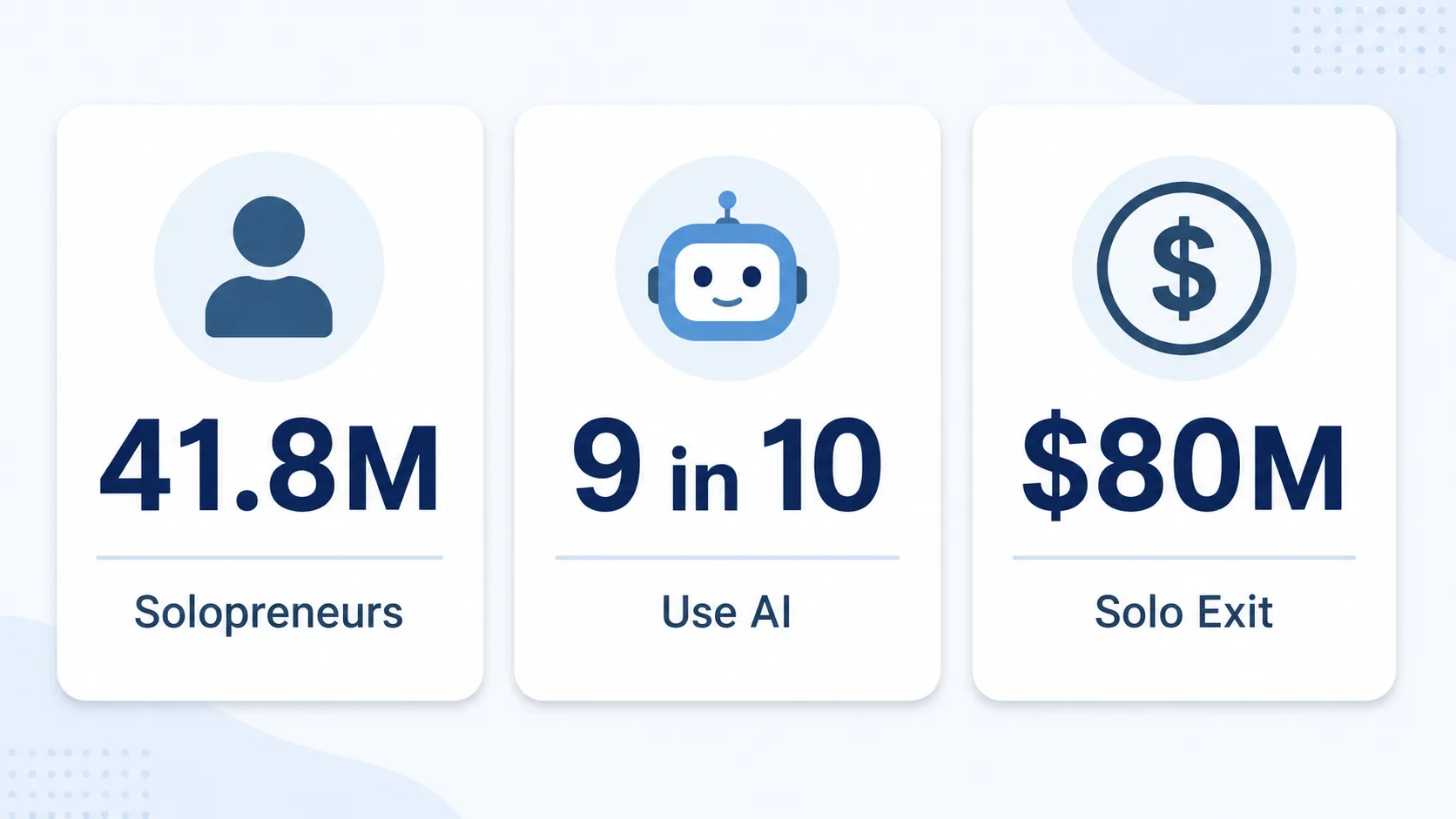
Before getting into the playbook, it is worth understanding the scale of what is shifting.
- According to the State of Solopreneurship 2026 report, there are now 41.8 million solopreneurs in the United States alone, contributing $1.3 trillion to the economy. 9 in 10 of them report using AI tools as a core part of how they work. Solopreneurship is growing at 5% year-over-year while employer firm growth sits at 1.7%.
- The US Census Bureau reports 29.8 million one-person businesses active in the US, nonemployer establishments now outnumber employer businesses roughly 3 to 1.
- The Stack Overflow Developer Survey 2025 found that 51% of professional developers now use AI tools daily. 84% are either using or actively planning to integrate AI into their workflow. These are not hobbyists experimenting on weekends. These are working professionals who have restructured how they build software around AI assistance.
- And perhaps the most striking proof point of all: Maor Sholomo built Base44 using AI coding tools, launched it as a solo founder, and sold it to Wix for $80 million in just six months.
The barrier to building software has not just lowered. It has fundamentally changed shape.
As Kyle Jensen of the Yale School of Management put it: "The ability of a person to scale themselves has just become amazing."
The AI Tools Powering The Build Phase
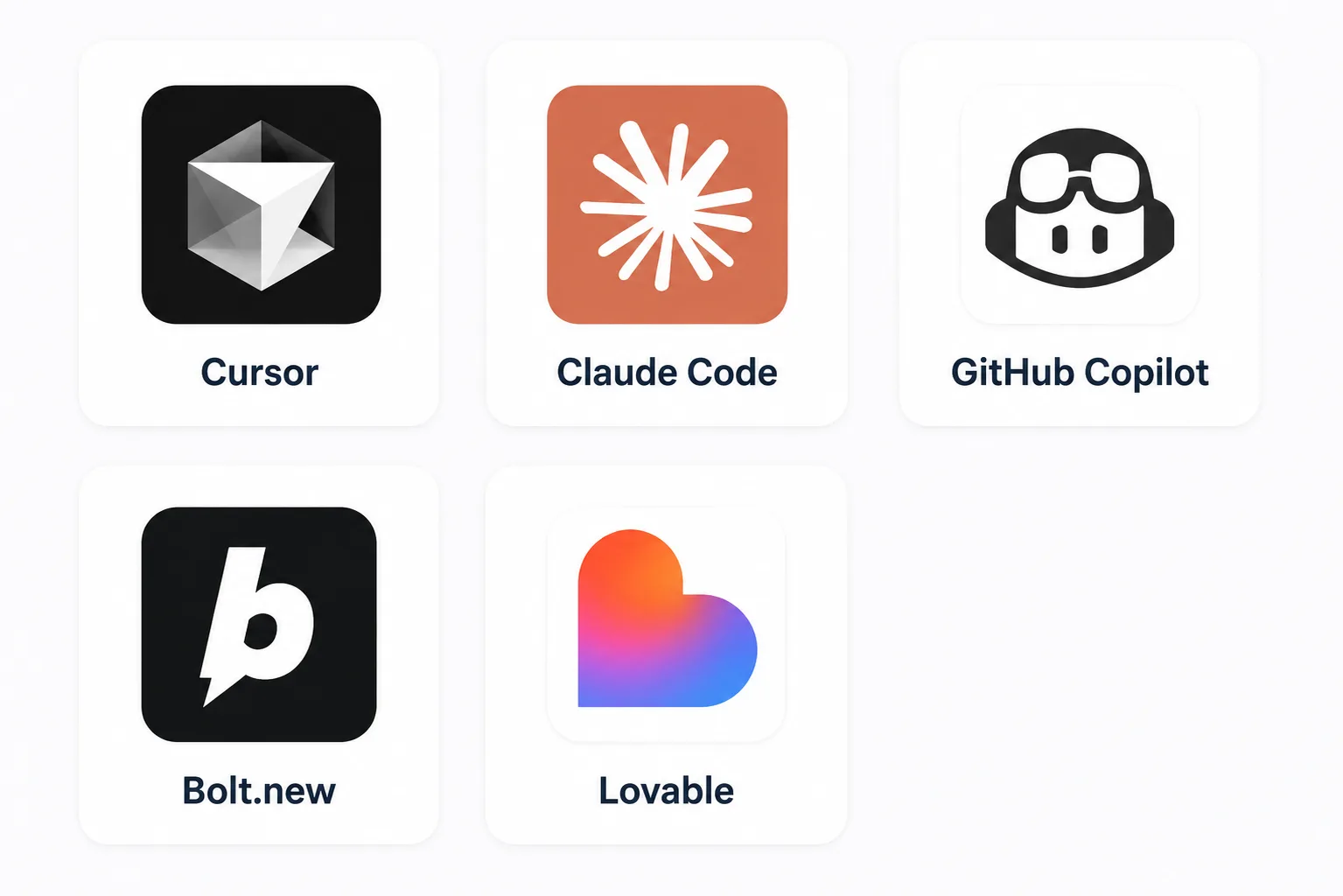
The first thing most solo founders and indie developers need to understand is that there is no single tool that does everything. The weekend launch is powered by a stack and each tool in the stack handles a specific job.
For writing code, the leading tools in 2026 are Cursor, Claude Code, GitHub Copilot, and Bolt.new. For a detailed breakdown of how these tools compare and which ones are worth your time and money.
The Real IT World published a comprehensive guide on the best AI tools for developers in 2026 that covers exactly this. And if you are specifically looking at how ChatGPT integrations fit into a solo founder's daily workflow, the breakdown of the best apps in ChatGPT in 2026 is worth reading alongside it.
Here is how the core tools break down:
- Cursor is a full VS Code fork rebuilt from the ground up with AI at its core. It understands your entire codebase, not just the file you have open. It can make multi-file edits, propose architectural changes, and explain complex logic. Monthly plan starts at $20/month.
- Claude Code is Anthropic's agentic coding tool. It operates directly from your terminal, reads your project files, executes commands, and can autonomously work through complex, multi-step implementation tasks. It is particularly strong for backend logic and API integration work. Available on the Claude Pro plan at $20/month or via API usage.
- GitHub Copilot remains the most widely deployed AI coding assistant globally. It integrates directly into VS Code, JetBrains, and Neovim. GitHub reports a 55% increase in code completion speed and a 70% suggestion acceptance rate among active users. Free tier available; Pro at $10/month.
- Bolt.new and Lovable are the most accessible entry points for non-technical founders. You describe what you want to build in plain language and the tool generates a working full-stack application. Lovable is generating over 100,000 projects per day as of 2026.
"58% of Replit business users are NOT engineers. The category includes marketing, sales, product managers, and designers," according to Replit's own platform data. This tells you everything about who is actually building with these tools today.
The most important skill in 2026 is no longer knowing which programming language to use. It is what the MasteringAI Solo Founder Report calls "clarity of intent", the ability to describe precisely what you want a system to do.
This applies well beyond coding. Getting useful output from any AI tool, whether you are building software or running a business, comes down to how well you can articulate what you need. Writing better AI prompts is quickly becoming one of the most transferable professional skills of 2026.
The Weekend Launch Playbook
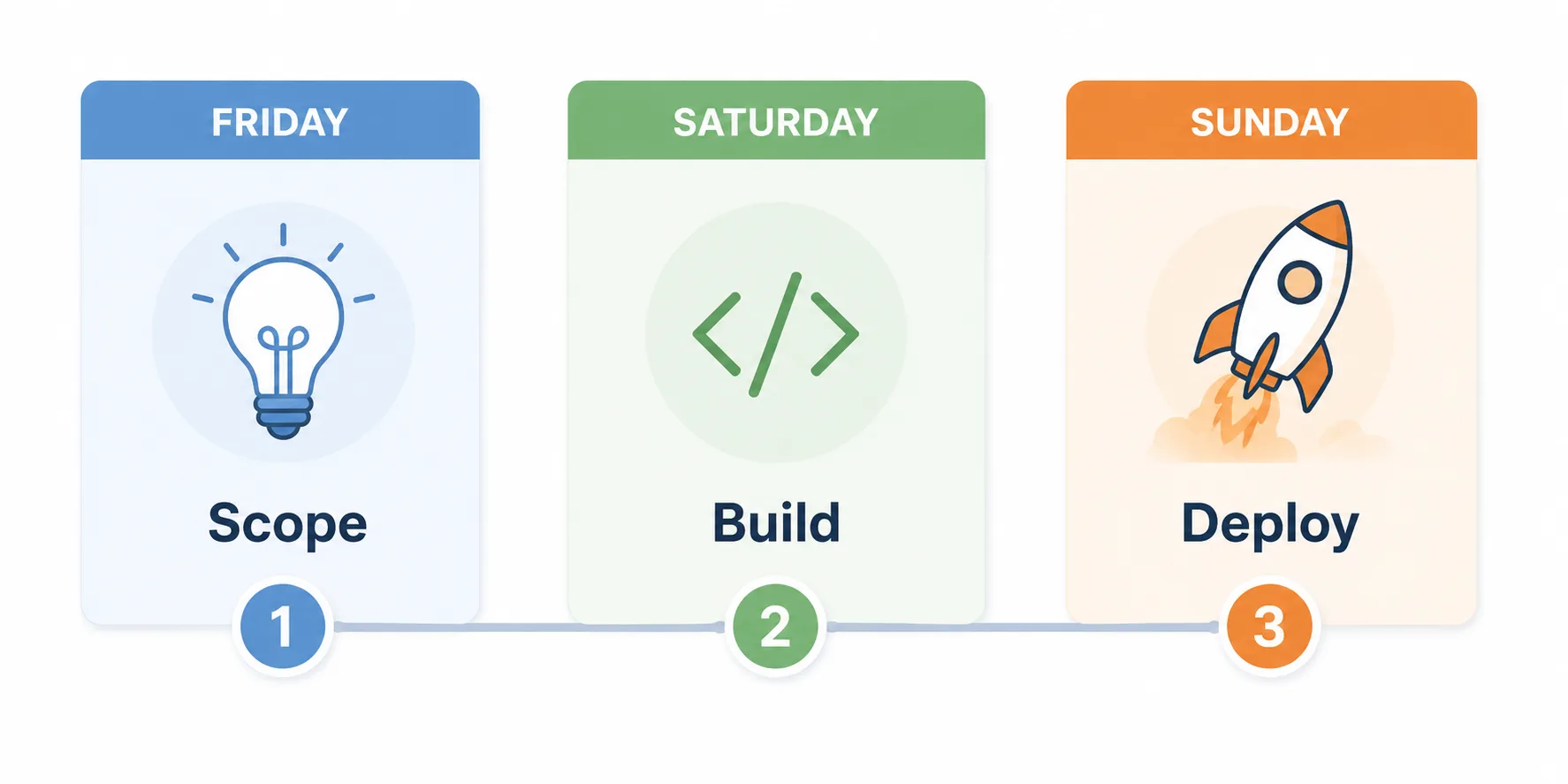
This is the framework that experienced solo founders are using to compress months of development into a single weekend. It is not magic. It is a process.
FRIDAY EVENING: SCOPE IT DOWN TO ONE PROBLEM
The biggest mistake first-time solo founders make is trying to build too much. A weekend launch is not about building a full product. It is about building the smallest possible version of one core feature that delivers real value.
On Friday evening, spend one to two hours doing three things:
Define the one problem your product solves. Write it in a single sentence. If it takes more than one sentence, it is not clear enough yet.
Sketch the user flow. Not wireframes. Just: what does a user do when they arrive, what is the one action that creates value, and what do they see when it works.
Pick your stack. For most solo founders, this means a React or Next.js frontend, a Node.js or Python backend, a managed Postgres or SQLite database, and a PaaS for deployment. Do not spend the weekend making infrastructure decisions. Pick a stack before Friday ends and commit to it.
The GitHub DORA Report 2025 found that AI adoption among software development professionals has surged to 90%. The teams seeing the biggest gains are not the ones using the most tools. They are the ones using fewer tools with deeper integration.
SATURDAY: BUILD THE CORE FEATURE
Saturday is execution day. This is where the AI coding tools do their heaviest work.
Start by giving your AI tool, Cursor, Claude Code, or whichever you have chosen. A clear project brief. Describe the tech stack, the core feature, the data model, and the expected user flow. The more context you provide upfront, the less back-and-forth you need throughout the day.
Work through the application layer by layer: data model first, then API routes, then frontend components, then the connection between them. Do not try to build everything in parallel. Linear progress is faster than juggling multiple half-finished pieces.
For authentication, use Clerk or Auth0. Do not build auth from scratch on a weekend. For payments, use Stripe. For databases, use Supabase or Neon for managed Postgres with a generous free tier. These are the rails that let you move fast without reinventing solved problems.
By Saturday evening, the goal is a working application that runs locally. It does not need to look polished. It needs to work.
SUNDAY: DEPLOY, TEST, AND PUBLISH
Sunday is about getting from "works on my machine" to "works for anyone with a URL."
This is where most solo founders hit their first serious wall. And it is not the AI tools that cause the problem, it is the deployment layer.
Most AI-generated codebases do not come with a Dockerfile. They do not come with a deployment configuration. They come with working code and a README that assumes you know what to do next. If you have never deployed a full-stack application before, the gap between "works locally" and "works in production" is wider than it looks from the outside.
This is written in detail in this breakdown of why AI-built apps break in production the most common failure points are environment variable mismatches, missing build steps, and platform-specific runtime differences that the AI tool never accounted for.
The practical Sunday checklist:
- Set up your environment variables properly. Every API key, database URL, and secret that lives in your local .env file needs to be configured on your deployment platform before the app can run.
- Connect your GitHub repository to your deployment platform. Most modern PaaS platforms support automatic deployment on every push to your main branch.
- Add your custom domain and confirm SSL is configured. This takes about ten minutes on most platforms and makes the difference between something that looks like a real product and something that looks like a dev project.
- Test the core user flow end to end on the live URL before you publish anything.
For solo founders who want to understand how the full deployment process works from a code-complete application to a production URL, this guide on how to deploy a full-stack app built with AI walks through every step.
The Deployment Problem Nobody Warns You About

It is worth spending more time on this because it is where the most weekend launches stall, and where the line between a hobby project and a production-ready digital asset is actually drawn.
That line is not about the quality of your code. It is about operational architecture.
A hobby project runs. A production-ready application runs reliably, handles unexpected traffic, recovers from failures automatically, protects user data, and gives you visibility into what is happening when something goes wrong. Those properties do not come from the application code itself. They come from the infrastructure layer that surrounds it.
The AI coding tools have gotten extraordinarily good at generating working application code. What they do not generate is the operational layer that sits between your code and a working production environment. That layer, Docker configuration, environment variable management, build pipelines, process managers, health checks is still largely manual work.
This is a known gap, and it is narrowing. Platforms built specifically for AI-generated codebases are emerging that read your repository, identify the stack automatically, and handle the deployment configuration without you specifying it. But knowing this gap exists before you hit it on Sunday afternoon saves you hours of debugging.
For teams with serious production requirements, this is also where professional engineering oversight becomes non-negotiable. An experienced engineer reviewing the deployment architecture before a product goes live is not a bottleneck on the process. It is what separates a fast launch from a fragile one.
According to research compiled by macmdviewer.com, 20% of 2025 Stripe Atlas startups landed their first paying customer within 30 days of incorporation, more than double the 2020 rate.
Median Atlas 2025 startups generated 39% more revenue in their first six months than their 2024 counterparts. Speed of launch is directly correlated with early revenue outcomes. The faster you ship, the more quickly you find out whether the product creates real value.
Real Examples Of Solo Launches That Worked
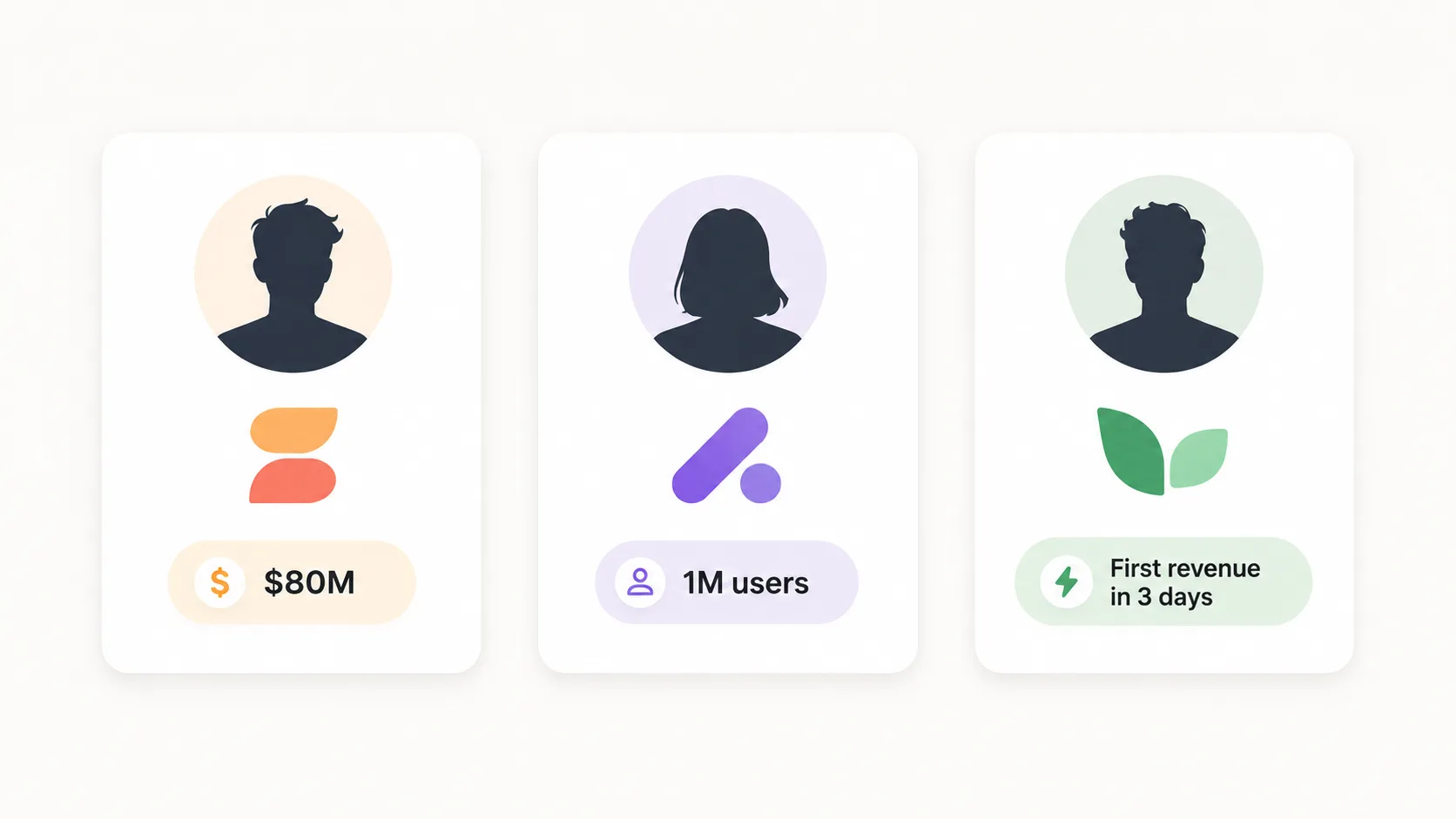
Maor Sholomo, Base44: Built an AI-powered app builder as a solo founder using AI coding tools, grew it to significant revenue, and sold to Wix for $80 million in six months [LINK: https://www.masteringai.io/solo-founder-revolution]. Not a weekend project, but the initial version was built by one person moving fast.
Pieter Levels, Nomad List and Remote OK: Levels built multiple profitable internet businesses as a single developer. His stated philosophy, shared across dozens of interviews, is to ship as fast as possible and iterate based on real user feedback. "Build in public" and "ship before it's ready" are core operating principles that predate AI tools and are now more executable than ever.
The indie hacker community on platforms like Indie Hackers and Product Hunt regularly sees solo founders posting weekend projects that generate their first revenue within days of launch. The pattern is consistent: focused scope, AI-assisted build, fast deployment, immediate user feedback loop.
As Andrej Karpathy, former AI Director at Tesla and co-founder of OpenAI and the person who coined the term "vibe coding," described it: "The hottest new programming language is English." The technical floor for building and shipping software has moved. The constraint is now clarity of vision, not technical skill.
That constraint applies to the team you build around the product too. As solo founders grow, keeping up with AI across business functions not just in the codebase is what separates founders who scale from those who become the bottleneck.
The Honest Tradeoff: Speed Vs Quality
It would be dishonest to present the weekend launch as universally smooth. The MasteringAI report notes a "vibe coding hangover" phenomenon: cases where AI-generated code creates technical debt, duplication, and architecture problems that become expensive to fix at scale.
This is real. It happens because AI tools optimise for generating working code quickly, not for generating code with the architectural integrity that a production system at scale actually requires.
Here is what the hangover looks like in practice:
Duplicated logic spread across files because the AI generated similar functionality in two places without recognising the overlap. No consistent error handling strategy because each component was generated independently without a shared pattern.
Database queries that work at ten users but degrade badly at ten thousand because no one reviewed the query plan. Authentication flows that pass basic testing but have edge cases an experienced security engineer would have caught immediately.
A METR study cited in the MasteringAI report found a notable perception gap: developers believe they are coding 20% faster with AI assistance. The measured reality across controlled tests was 19% slower for experienced engineers working on unfamiliar codebases.
This is not an argument against using AI tools. It is an argument for using them with professional oversight intact.
The most effective model emerging in 2026 is not "AI replaces developers." It is "AI enables founders and professional engineering teams to collaborate and ship at unprecedented speeds." The founder or product person drives the scope and direction. The AI handles the syntax, boilerplate, and initial implementation. The professional engineer reviews the architecture, the security model, the database design, and the production readiness before anything goes live.
That model produces the best outcomes: the speed of AI-assisted development with the reliability of professional oversight.
The weekend launch framework works best for:
- New products with a clearly defined scope
- Founders who intend to validate quickly and iterate
- Applications where the initial version is intentionally simple
- Technical founders who can review AI-generated code critically
It works less well for:
- Complex applications with intricate state management requirements
- Products in regulated industries where code quality standards are non-negotiable
- Teams that need to hand off the codebase to other developers immediately
The AI tools powering this wave are most powerful in the hands of people who understand their limitations alongside their capabilities. The best solo founders using this workflow are not blindly accepting every AI suggestion. They are directing, reviewing, and making intentional decisions about what to ship.
What The Fastest Builders Have In Common
After looking at dozens of solo founder stories and the data behind them, a few consistent patterns emerge among the people who are shipping fastest:
- They scope ruthlessly. The weekend launch works when you are building one thing, not five. The founders moving fastest are the ones who have the most discipline about what they are not building.
- They pick boring tools. The fastest launches do not use the newest, most experimental framework. They use Next.js, Node.js, Postgres, and Stripe because those tools are well-supported, well-documented, and the AI tools know them deeply.
- They treat deployment as part of the build, not a separate phase. The founders who get stuck are the ones who think about deployment on Sunday. The ones who ship are the ones who thought about it on Friday.
- They involve engineers at the right moments. The fastest teams are not purely solo operations. They use AI to accelerate execution and bring in professional engineering judgment for architecture, security, and production readiness. That combination ships faster and breaks less.
- They publish before it is perfect. "Done" is not a state. It is a decision. The founders consistently generating early revenue are the ones who push to production with a 70% product and use real user feedback to drive the remaining 30%.
- They talk about what they are building. The "build in public" movement is not just a content strategy. It creates accountability, attracts early users, and generates feedback before launch. Posting about what you are building on X and LinkedIn while you are building it is part of the process, not an afterthought.
Conclusion
The weekend launch is not a myth and it is not reserved for 10x engineers with decades of experience. It is a repeatable process that thousands of indie developers and solo founders are using right now to go from an idea to a live product in 48 hours.
The tools exist. The playbook is documented. The data backs it up.
What has not changed is the need for clear thinking, focused execution, and the willingness to ship something imperfect and improve it with real feedback. AI tools accelerate the building. They do not replace the judgment about what to build or the discipline to finish it.
The question is not whether the weekend launch is possible. It is whether you are going to start this Friday.
Frequently Asked Questions
Find quick answers to common questions about this topic