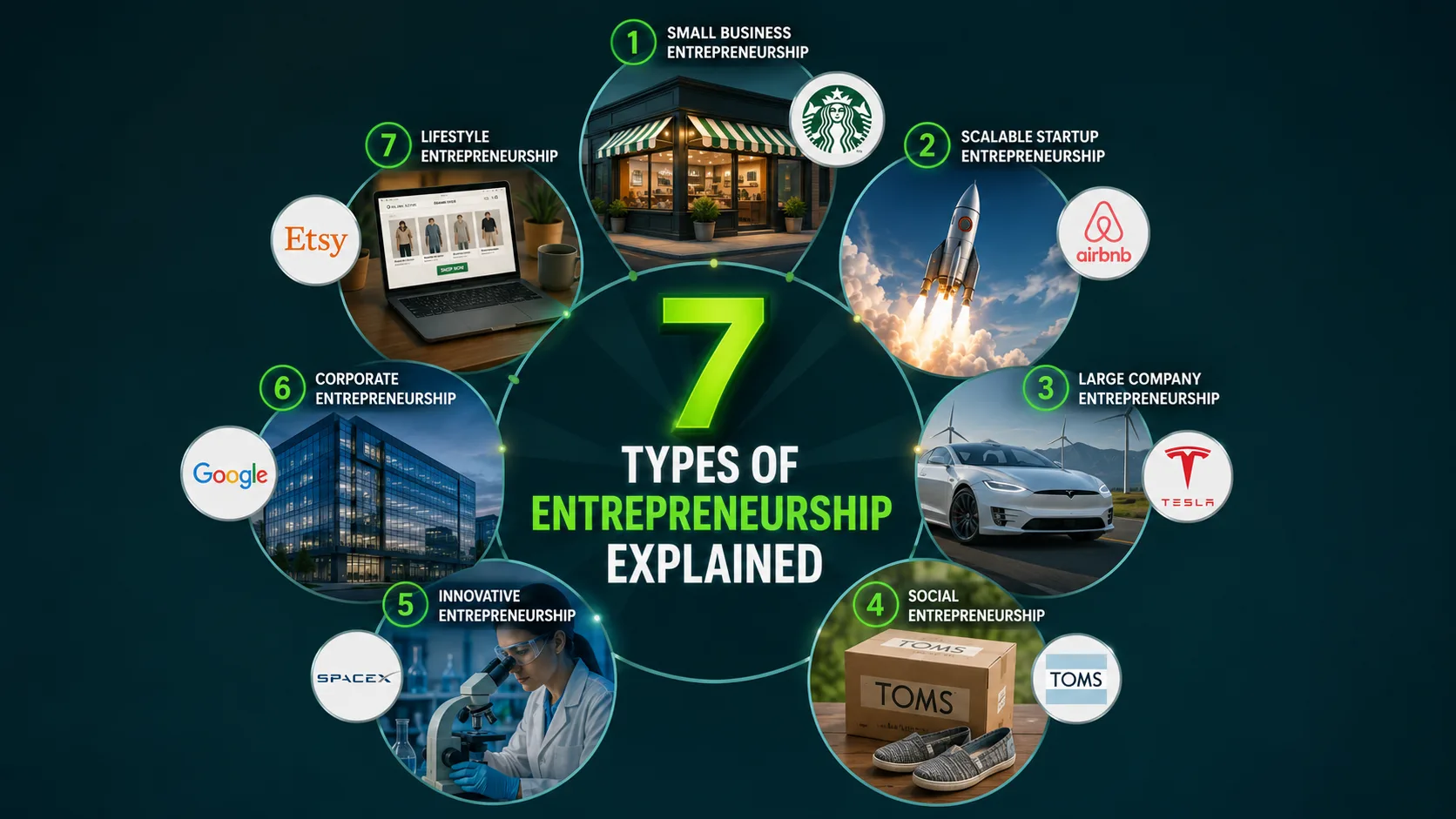
What separates successful entrepreneurs from everyone else?
Many people believe the answer is money, education, connections, or even luck. While these factors can certainly help, they are rarely the deciding factor. The real difference lies in how entrepreneurs think, react to challenges, and continuously improve themselves.
This way of thinking is known as the entrepreneurial mindset.
An entrepreneurial mindset is more than simply wanting to start a business. It is a collection of attitudes, habits, and behaviors that enable people to identify opportunities, solve problems creatively, embrace calculated risks, and continue learning even when faced with setbacks.
Whether you are planning to launch your first startup, become a freelancer, grow an existing company, or simply improve your professional skills, developing an entrepreneurial mindset can help you make better decisions and create long term success.
The encouraging news is that this mindset is not something people are born with. Like any valuable skill, it can be developed through consistent habits and deliberate practice.
In this comprehensive guide, we will explore fifteen powerful habits that successful entrepreneurs develop over time. These habits are based on real world business practices and can help anyone become more confident, adaptable, and innovative.
What Is an Entrepreneurial Mindset
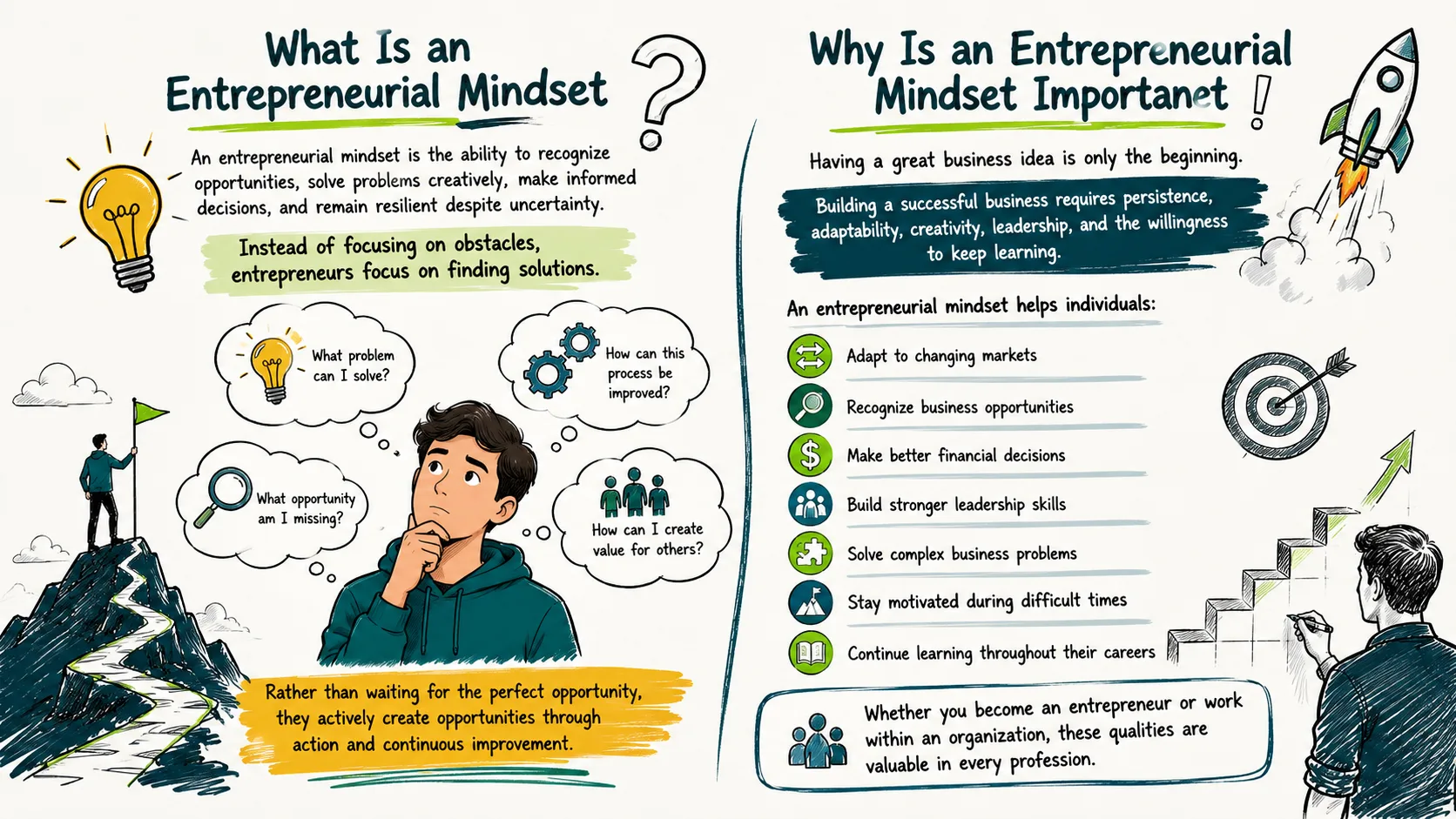
An entrepreneurial mindset is the ability to recognize opportunities, solve problems creatively, make informed decisions, and remain resilient despite uncertainty.
Instead of focusing on obstacles, entrepreneurs focus on finding solutions.
People with an entrepreneurial mindset are constantly asking questions such as:
What problem can I solve?
How can this process be improved?
What opportunity am I missing?
How can I create value for others?
Rather than waiting for the perfect opportunity, they actively create opportunities through action and continuous improvement.
Why Is an Entrepreneurial Mindset Important
Having a great business idea is only the beginning.
Building a successful business requires persistence, adaptability, creativity, leadership, and the willingness to keep learning.
An entrepreneurial mindset helps individuals:
• Adapt to changing markets
• Recognize business opportunities
• Make better financial decisions
• Build stronger leadership skills
• Solve complex business problems
• Stay motivated during difficult times
• Continue learning throughout their careers
Whether you become an entrepreneur or work within an organization, these qualities are valuable in every profession.
Characteristics of Successful Entrepreneurs
Although every entrepreneur is different, many share several common characteristics.
| Characteristic | Why It Matters |
|---|---|
| Curiosity | Helps discover new opportunities |
| Creativity | Generates innovative solutions |
| Discipline | Ensures consistent progress |
| Confidence | Supports better decision making |
| Adaptability | Responds effectively to market changes |
| Leadership | Inspires teams and customers |
| Resilience | Helps overcome setbacks |
| Continuous Learning | Keeps knowledge and skills updated |
These characteristics are developed through consistent habits rather than natural talent alone.

Habit 1 Learn Every Day
Successful entrepreneurs never stop learning.
Industries evolve rapidly, technologies change, and customer expectations continue to grow. Entrepreneurs who stop learning often fall behind.
Continuous learning may include:
Reading business books
Listening to podcasts
Taking online courses
Attending webinars
Following industry leaders
Studying competitors
Even spending thirty minutes each day learning something new can significantly improve your business knowledge over time.
Practical Example
Many successful technology founders dedicate time every week to studying artificial intelligence, cybersecurity, or digital marketing trends to stay ahead of competitors.
Habit 2 Focus on Solving Problems
Businesses exist because problems exist.
Instead of asking,
How can I make money?
Successful entrepreneurs ask,
What problem can I solve?
The larger the problem and the better your solution, the greater the opportunity for business success.
Customers rarely buy products.
They buy solutions.
Example
People do not purchase ride sharing applications because they enjoy downloading apps.
They use them because they need convenient transportation.
Always focus on solving meaningful problems rather than creating products without demand.
Habit 3 Take Calculated Risks
Entrepreneurs are often described as risk takers.
In reality, successful entrepreneurs avoid unnecessary risks.
Instead, they take calculated risks based on research, planning, and informed decision making.
Before making major decisions, consider:
Potential rewards
Possible challenges
Financial impact
Market demand
Alternative solutions
Taking calculated risks increases confidence while reducing unnecessary losses.
Habit 4 Build Self Discipline
Motivation comes and goes.
Discipline creates consistent results.
Entrepreneurs often work without supervisors.
They must manage their own schedules, priorities, and responsibilities.
Simple daily habits such as planning tomorrow's tasks, limiting distractions, and maintaining healthy routines can significantly improve productivity.
Consistency always beats occasional bursts of motivation.
Habit 5 Stay Curious
Curiosity is one of the most valuable entrepreneurial qualities.
Curious people ask questions.
They challenge assumptions.
They explore new industries.
They seek better solutions.
Questions every entrepreneur should ask include:
Why does this process exist?
Can technology improve this?
Why are customers unhappy?
Is there a better way?
Curiosity leads to innovation.
Innovation creates opportunities.
Habit 6 Accept Failure as a Learning Experience
Failure is not the opposite of success.
It is often part of the journey toward success.
Every unsuccessful marketing campaign, failed product launch, or rejected proposal provides valuable lessons.
Instead of asking,
Why did I fail?
Ask,
What can I improve next time?
Entrepreneurs who learn from failure improve faster than those who fear making mistakes.
Habit 7 Manage Time Effectively
Time is one of the few resources that cannot be replaced.
Successful entrepreneurs prioritize high impact activities.
Examples include:
Customer meetings
Product development
Strategic planning
Learning new skills
Financial planning
Low value activities should be minimized or delegated whenever possible.
Creating daily priorities helps maintain focus on business growth.
Habit 8 Build Strong Relationships
Business is built on relationships.
Networking creates opportunities that advertisements alone cannot.
Entrepreneurs should actively build relationships with:
Customers
Mentors
Investors
Business partners
Industry professionals
Employees
Strong professional relationships often lead to referrals, partnerships, investments, and valuable advice.
Habit 9 Think Long Term
Many entrepreneurs fail because they focus only on short term profits.
Successful entrepreneurs build businesses that create value over many years.
Long term thinking includes:
Building a trusted brand
Creating loyal customers
Investing in employees
Improving products continuously
Developing sustainable business models
Businesses built for long term success often outperform businesses chasing quick profits.
Habit 10 Adapt to Change
Markets change continuously.
Customer preferences evolve.
Technology advances rapidly.
Entrepreneurs who resist change often struggle to remain competitive.
Adaptability means:
Learning new technologies
Improving business processes
Listening to customer feedback
Testing new ideas
Updating business strategies
The businesses that adapt quickly usually outperform those that remain unchanged.
Habit 11 Develop Strong Decision Making Skills
Entrepreneurs make decisions every day.
Some decisions are small, while others can determine the future of an entire business. Waiting for perfect information often leads to missed opportunities. Successful entrepreneurs gather relevant data, evaluate the available options, consider the risks, and make informed decisions with confidence.
Good decision making is a skill that improves with experience.
Ways to Improve Decision Making
Study the available data before making important choices.
Consider both short term and long term consequences.
Seek advice from mentors or industry experts when necessary.
Avoid making emotional decisions during stressful situations.
Review past decisions to understand what worked and what did not.
Practical Example
A startup founder deciding whether to launch a new product should evaluate customer demand, production costs, competitor offerings, and potential risks before investing significant resources.
Habit 12 Build Financial Awareness
Many businesses fail not because they lack customers but because they fail to manage their finances effectively.
An entrepreneurial mindset includes understanding how money flows through a business.
Every entrepreneur should have a basic understanding of:
Revenue
Expenses
Profit
Cash flow
Business budgeting
Investment planning
Financial awareness allows entrepreneurs to make informed decisions and prepare for future growth.
Simple Financial Habits
Track every business expense.
Separate personal and business finances.
Create monthly budgets.
Review financial reports regularly.
Build an emergency reserve.
Understanding your numbers helps you make smarter business decisions.
Habit 13 Take Responsibility for Your Actions
Successful entrepreneurs rarely blame external circumstances.
Instead of focusing on what went wrong, they focus on what they can improve.
Taking responsibility builds trust with customers, employees, and business partners.
It also encourages continuous improvement.
Compare Two Mindsets
| Fixed Mindset | Entrepreneurial Mindset |
|---|---|
| Blames others | Takes responsibility |
| Avoids challenges | Faces challenges confidently |
| Gives up after failure | Learns and improves |
| Waits for opportunities | Creates opportunities |
| Focuses on excuses | Focuses on solutions |
Taking ownership of your actions is one of the fastest ways to grow personally and professionally.
Habit 14 Be Customer Focused
Businesses exist because customers have needs.
Entrepreneurs who understand their customers build products and services that provide genuine value.
Customer focused entrepreneurs constantly ask:
What problems are customers experiencing?
How can we improve their experience?
What feedback are they providing?
How can we serve them better?
Practical Ways to Stay Customer Focused
Conduct customer surveys.
Read online reviews.
Respond professionally to feedback.
Analyze customer purchasing behavior.
Improve products based on customer suggestions.
Businesses that consistently listen to customers often build stronger brand loyalty and long term success.
Habit 15 Never Stop Innovating
Innovation is not only about inventing something completely new.
It also means improving existing products, services, and business processes.
Entrepreneurs with an innovative mindset continuously search for better ways of doing things.
Innovation may involve:
Improving customer service
Automating repetitive tasks
Introducing new technologies
Creating better user experiences
Developing more efficient business models
Small improvements made consistently often create significant competitive advantages.
How to Develop an Entrepreneurial Mindset Every Day
Building an entrepreneurial mindset requires daily practice.
Use the following habits consistently.
| Daily Activity | Time Required |
|---|---|
| Read a business or personal development book | 20 minutes |
| Follow industry news | 15 minutes |
| Learn one new skill | 30 minutes |
| Record business ideas | 10 minutes |
| Talk to customers or professionals | 20 minutes |
| Reflect on daily lessons | 10 minutes |
Small improvements every day create significant progress over time.
Common Mistakes That Prevent Entrepreneurial Growth
Many people struggle to develop an entrepreneurial mindset because they repeatedly make the same mistakes.
Waiting for the Perfect Time
There is rarely a perfect moment to start a business or begin learning.
Successful entrepreneurs start with the resources they currently have and improve along the way.
Fear of Failure
Fear often prevents people from taking action.
Every entrepreneur experiences setbacks.
The difference is that successful entrepreneurs treat failure as feedback instead of defeat.
Avoiding Continuous Learning
Technology, customer expectations, and industries continue to evolve.
Entrepreneurs who stop learning eventually lose their competitive advantage.
Ignoring Customer Feedback
Some entrepreneurs become attached to their ideas instead of listening to customers.
Customer feedback should guide business improvements.
Focusing Only on Money
Businesses built solely around making money often struggle to retain customers.
Businesses built around solving real problems naturally create long term profitability.
Entrepreneurial Mindset Checklist
Use this checklist to evaluate your progress.
Do you read or learn something new every day?
Do you actively look for business opportunities?
Do you solve problems instead of complaining?
Do you accept feedback positively?
Do you learn from mistakes?
Do you manage your finances carefully?
Do you make informed decisions?
Do you adapt when circumstances change?
Do you invest in relationships?
Do you continuously improve your skills?
If you answered yes to most of these questions, you are already developing a strong entrepreneurial mindset.
Key Takeaways
An entrepreneurial mindset is not reserved for business owners. It is a valuable way of thinking that helps individuals become better problem solvers, leaders, innovators, and decision makers.
The fifteen habits discussed in this guide provide a practical framework for developing this mindset over time.
Remember these essential principles:
Continuous learning creates new opportunities.
Problems often become profitable business ideas.
Discipline produces consistent progress.
Customer needs should guide innovation.
Failure is an opportunity to learn and improve.
Adaptability is essential in today's rapidly changing business environment.
Long term thinking creates sustainable success.
Developing these habits requires patience and consistent effort, but the rewards extend far beyond business success. They contribute to personal growth, professional development, and lifelong learning.
Final Thoughts
Success in entrepreneurship is not determined solely by having a brilliant idea or access to significant financial resources. It is built through the daily habits that shape how you think, solve problems, respond to challenges, and create value for others.
An entrepreneurial mindset empowers individuals to identify opportunities where others see obstacles, embrace change instead of fearing it, and continue learning in an increasingly competitive world.
Whether you are a student, startup founder, freelancer, business owner, or working professional, adopting these fifteen habits can help you unlock new opportunities and achieve sustainable growth.
Remember, successful entrepreneurs are not born with extraordinary abilities. They develop extraordinary habits through consistent practice, curiosity, resilience, and a commitment to continuous improvement.
Ready to Turn Your Business Idea into Reality?
Having the right mindset is only the first step. Building a successful business also requires a strong digital presence that attracts customers and supports long term growth.
At TenG Spectrum, we help startups, entrepreneurs, and growing businesses transform ideas into successful digital experiences through premium website development, custom web applications, search engine optimization, and digital strategy services.
Whether you are launching your first business or scaling an existing one, our team can help you create a professional online presence that drives growth and builds credibility.
Frequently Asked Questions
Find quick answers to common questions about this topic