How to Outrank National Competitors as a Small Local Business
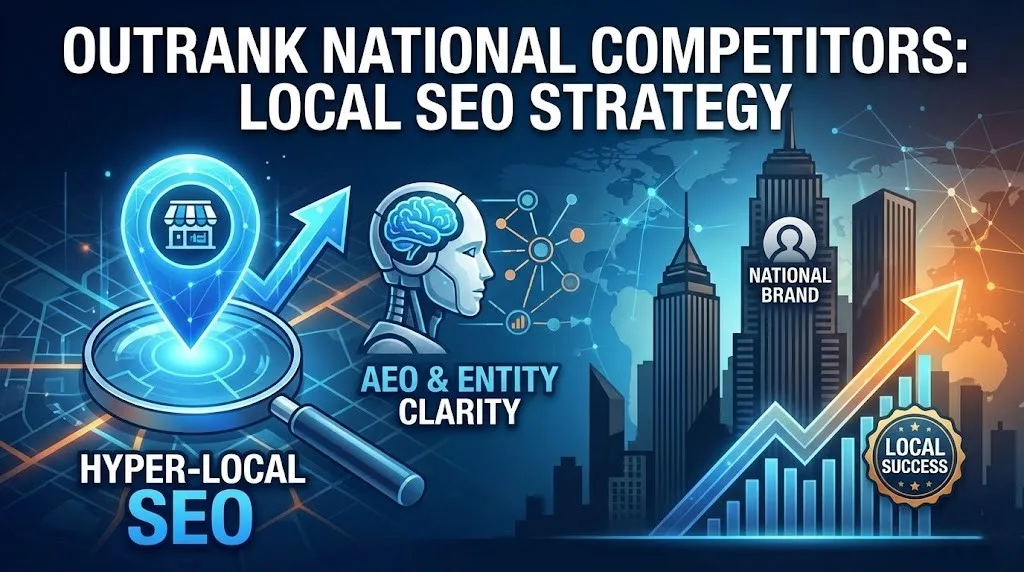
To outrank massive national competitors, small businesses must dominate the "Proximity" and "Relevance" factors by "Niching Down." By focusing on hyper-local service areas and maintaining high Local Entity Clarity through structured data, small brands can capture specific user intent that broad, generic national campaigns frequently overlook.
How TenG Spectrum Offers 100% Online Presence Guarantee — From Zero to One
The Strategy of Hyper-Local Relevance
National brands often struggle with "Generalization Bias," where their content is too broad to satisfy the specific geographic needs of a local user. Search engines prioritize the most relevant and physically closest results for local intent queries. Small businesses gain a competitive edge by creating content that addresses neighborhood-specific landmarks, local regulations, and community-centric pain points. This creates a high level of "Geographic Relevance" that an enterprise-level site cannot easily replicate at scale.
Local Entity Clarity is the technical backbone of this strategy. Search engines utilize "knowledge graphs" to understand exactly where and what a business is. By implementing precise structured data and ensuring absolute consistency in digital citations, a small business provides the "Certainty" search engines need to recommend them over a distant, though larger, competitor. When a search engine is 100% certain of your location and service niche, your "Prominence" score increases within that specific radius.
Efficiency in a remote-first digital environment also allows small teams to move faster. Utilizing lightweight frameworks like Python-driven automation for local keyword research or agile WordPress deployments allows a local business to update its "digital storefront" in response to local trends much faster than a national brand buried in corporate approval layers.
How to Get Your Business Cited in Google AI Overviews
Local Dominance Checklist
| Strategy | Key Action Item | Competitive Advantage |
| Hyper-Local Pages | Create dedicated landing pages for specific neighborhoods or districts. | Captures "near me" traffic that broad city-level pages miss. |
| Entity Schema | Deploy LocalBusiness and PostalAddress structured data. | Increases "Entity Certainty" for AI-driven answer engines. |
| Review Velocity | Incentivize a steady stream of reviews mentioning specific local services. | Signals current activity and reliability to ranking algorithms. |
| Niche Backlinks | Secure links from local Chambers of Commerce and community blogs. | Builds "Geo-Authority" that national competitors lack. |
Contact TenG Spectrum today for premium digital solutions that ensure your brand remains visible and authoritative in the age of AI search.
Frequently Asked Questions
Find quick answers to common questions about this topic