
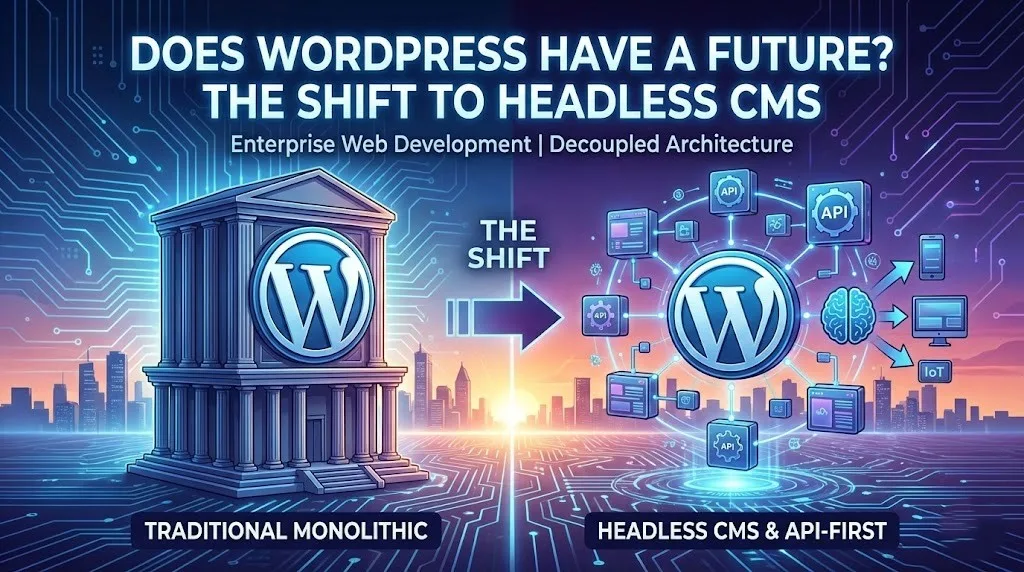
Does WordPress Have a Future?
Yes, WordPress has a robust future secured by its evolution into a "Headless CMS" architecture and its dominance in the enterprise sector. Rather than declining, the platform is transitioning from a monolithic website builder into a powerful, API-first content engine that powers modern, JavaScript-based frontends.
Why Websites Matter in the AI Age and Why Web Development Is Far From Over
The Evolution: Why WordPress Remains Dominant
The narrative that WordPress is "dying" stems from a misunderstanding of modern web architecture. While traditional, theme-heavy WordPress setups are becoming less common for high-performance needs, the core software is thriving as a backend data source. By decoupling the backend (content management) from the frontend (user interface), developers can leverage the user-friendly WordPress admin panel while building blazing-fast frontends using technologies like React, Next.js, or Vue.
Furthermore, the Gutenberg Block Editor has matured into a full-site editing tool, offering a component-based approach that rivals proprietary page builders. This flexibility allows content teams to maintain high velocity without relying on developers for every layout change.
Finally, the ecosystem's integration capabilities are unmatched. Through the REST API and GraphQL, WordPress easily connects with CRM systems, marketing automation tools, and Python-based data pipelines. This interoperability ensures it remains a central hub in complex enterprise digital stacks, rather than just a blogging tool.
Checklist: Future-Proofing a WordPress Architecture
To ensure a WordPress implementation remains viable and high-performing, organizations must pivot toward modern development standards.
| Strategy | Objective | Technical Implementation |
| Go Headless | Decouple backend and frontend for speed. | Use WordPress for content; build frontend with Next.js or Nuxt. |
| API Optimization | Improve data delivery speed. | Implement WPGraphQL to fetch only exact data needed. |
| Modern Hosting | Ensure scalability and security. | Utilize containerized hosting (Docker/Kubernetes) over shared servers. |
| Asset Offloading | Reduce server load. | Serve media via CDNs (AWS S3, Cloudflare) rather than local folders. |
Contact TenG Spectrum today for premium digital solutions that ensure your brand remains visible and authoritative in the age of AI search.
Learn More:
How Many Pages Does a Website Need? (Guide for Small Businesses & Clinics)
Why Every Business Needs a Website
Why Does Your Website Need Regular Maintenance?
Why WordPress Business Websites Need Ongoing Maintenance
https://www.freecodecamp.org/news/what-wordpress-development-looks-like-in-the-age-of-ai/
Frequently Asked Questions
Find quick answers to common questions about this topic