
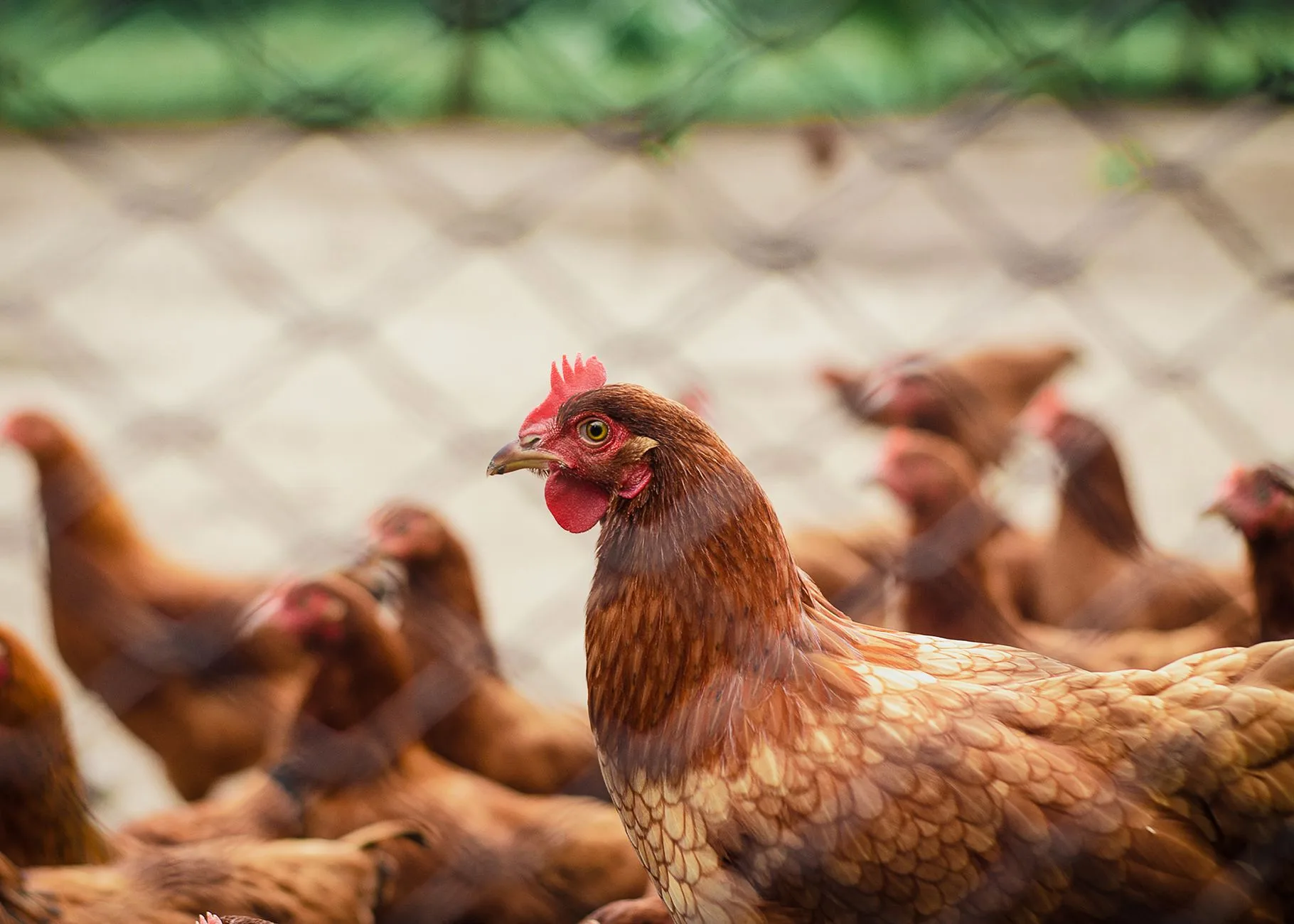
Running a commercial poultry farm—especially a layer operation or wholesale egg distribution business—is an exercise in working-capital management and biological risk control. Feed accounts for 65% to 70% of total operational expenditure, daily egg production fluctuates based on ambient temperature and feed quality, and local wholesale buyers regularly run rolling credit ledgers (khata) that can stall cash flow.
Historically, farms managed these operations using physical paper registers, whiteboards, or generic desktop spreadsheets. However, manual record-keeping introduces invisible losses: unrecorded egg breakages, untracked feed wastage, late disease detection, and disputed customer debt balances.
Modern poultry management software aims to eliminate these operational bottlenecks. This guide breaks down the core architecture of poultry management systems, compares enterprise ERPs against modern mobile-first applications, and provides an evaluation checklist to help you select the best solution for your farm's scale.
The Core Problem: Why Spreadsheets and Paper Ledgers Break
Most poultry farm software implementations fail not because the code is faulty, but because farming environments are biologically volatile and physically demanding. Paper and basic spreadsheets collapse under three common operational realities:
- The Shed-to-Office Friction: Egg collections happen inside sheds with dust, moisture, and zero connectivity. When supervisors must walk to a central desktop to log morning collections, numbers are postponed, rounded, or forgotten.
- Disconnected Tray and Loose-Piece Math: Eggs are gathered as individual pieces, packed into 30-egg trays, and sold in cases or loose units. Manual calculations introduce rounding discrepancies that hide tray shrinkage and theft.
- Informal Khata Creep: Selling to local bakeries, marts, and wholesale vans usually involves partial cash and partial credit. Without instantaneous, automated receipts that update running balances at the point of sale, customer balance disputes become common.
Enterprise Poultry ERPs vs. Lightweight Mobile-First PWAs
Before reviewing specific features, it is critical to understand the two fundamental architectural models available on the market today:
| Evaluation Dimension | Legacy / Enterprise Poultry ERPs | Modern Mobile-First Layer PWAs |
| Primary Target | Large corporate integrators, parent stock hatcheries, and feed processing mills. | Independent commercial layer farms (1,000–50,000 birds) and regional egg traders. |
| Deployment Model | On-premise server or desktop-centric cloud portal requiring complex configurations. | Progressive Web App (PWA) running directly on mobile browsers with offline sync. |
| Offline Capability | Often requires stable internet; mobile apps act merely as viewer extensions. | Local-first storage (IndexedDB); full offline billing and logging inside connectivity-dead sheds. |
| Sales & POS Workflow | Multi-screen invoice generation optimized for desktop accounting teams. | 1-tap tray multipliers, mobile card views, and instant WhatsApp receipt generation. |
| Implementation Curve | 4 to 12 weeks with dedicated IT training and high setup costs. | Same-day onboarding with simple mobile touch controls. |
6 Non-Negotiable Features to Look For in Poultry Management Software
When evaluating software for a commercial layer setup or egg route, look beyond generic accounting features. The system must natively support poultry-specific biological and logistics workflows:
[ Shed Collection (Offline) ] ──> [ Live Warehouse Reconciliation ] ──> [ POS Billing & Route Distribution ]
             │                                     │                                      │
   Auto HDP % & Breakage                Trays vs. Loose Piece Math                Khata & Instant WhatsApp Slips
1. Offline-First Shed Logging
Poultry sheds are frequently shielded metal structures located in rural areas where mobile signals drop. If software requires an active internet connection to submit daily egg counts, staff will revert to paper diaries. The system must store entries locally on the device and silently synchronize with the cloud database once network access is restored.
2. Automatic Hen-Day Production (HDP %) Calculations
A sudden dip in production is the earliest indicator of water contamination, disease onset, or nutritional deficiencies. The software must automatically compute Hen-Day Production using active live layer headcounts:
A system that plots this daily percentage against standard breed production curves (such as BV-380, Hy-Line, or Lohmann) allows managers to intervene before mortality climbs.
3. Integrated Feed Cost Per Egg
Tracking total feed bills is insufficient. Profitable operators track Daily Feed Cost Per Single Egg:
Your software should calculate this metric daily so you can adjust retail and wholesale price thresholds when feed raw materials (maize, soya, de-oiled rice bran) spike in price.
4. Real-Time Egg Stock & Warehouse Reconciliation
A robust poultry system manages two-way warehouse balancing:
If the software cannot separately balance clean saleable crates versus cracked/leaking eggs, inventory shrinkage will remain undetected.
5. Mobile POS with Automatic Tray-to-Piece Conversion
Egg distribution operates fast. Drivers and dispatch counters need quick-select buttons (1 tray, 5 trays, 10 trays, 30 trays) with instant rate toggles (Retail vs. Wholesale). The system must convert 30-egg multiples into loose piece remainders automatically without manual arithmetic.
6. WhatsApp-Integrated Khata Ledgers
In semi-urban and regional markets, physical printed paper receipts are frequently misplaced. The best modern systems generate compact bill summary cards formatted for direct sharing via WhatsApp. Each bill should clearly display:
- Current invoice items and pricing
- Amount paid today (Cash / UPI)
- Carried-over previous debt balance
- Updated total balance due
Software Selection Framework: Assessing Your Farm's Scale
Use this decision matrix to determine which type of poultry software matches your current operating model:
Tier 1: Small Homesteads & Backyard Flocks (<500 Birds)
- Operational Reality: Single-operator setups with limited daily transaction volume.
- Recommended Approach: Simple physical registers or free mobile farm-diary apps. Enterprise ERPs and paid commercial SaaS platforms introduce excessive overhead for operations of this size.
Tier 2: Independent Commercial Layer Farms (1,000 to 25,000 Birds)
- Operational Reality: Multiple sheds, hired farm labor, daily wholesale collections, and thousands of rupees in rolling feed supplier and customer credit.
- Recommended Approach: Lightweight, Mobile-First Poultry PWAs. Prioritize solutions with PIN-protected financials (so laborers can log eggs without seeing profit margins), offline resilience, and fast WhatsApp billing. Avoid heavy desktop ERPs that require dedicated data-entry operators.
Tier 3: Integrated Poultry Enterprises & Feed Mills (50,000+ Birds)
- Operational Reality: Vertically integrated operations spanning hatcheries, feed compounding plants, contract broiler farming, and cold-chain processing.
- Recommended Approach: Full-Scale Enterprise Poultry ERPs. Platforms in this category provide deep modules for feed formulation linear programming, breeder pedigree tracking, and multi-branch regulatory tax compliance.
